Back to battery chargers, starter motor and alternator

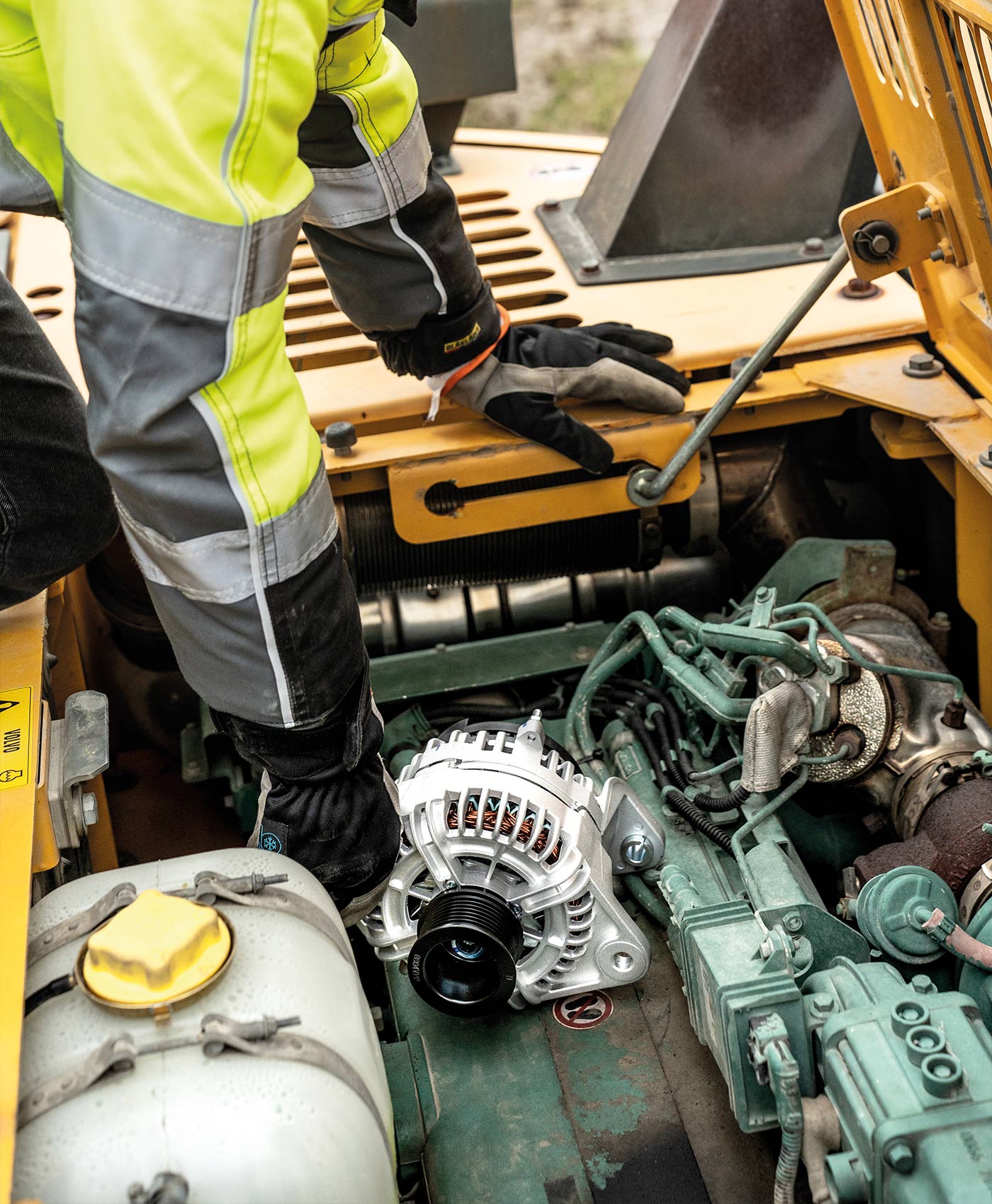
An alternator placed on the tracks of a Volvo excavator.

Buyer's guide

How to choose the right alternator

Choosing the right alternator is essential to ensure stable charging, reliable operation and an electrical system that meets your machine’s demands. In this guide, we walk through what you need to consider to find an alternator that suits your machine, your working environment and your future requirements – whether you operate in agriculture, construction or industrial machinery.

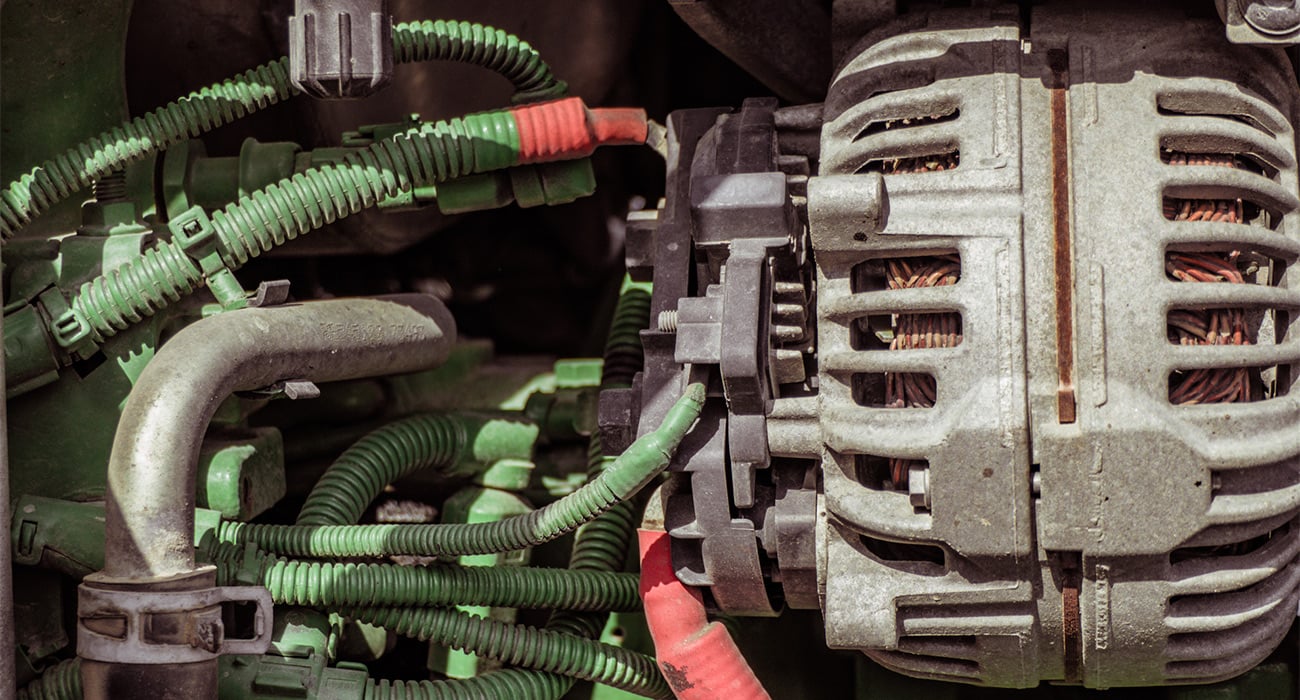
An alternator installed in an engine.

Why choosing the right alternator is crucial for your machine

  • An alternator charges the battery during operation and supplies the machine’s electrical system with power – essential for starting, lighting, heating, electronics and additional equipment
  • For machines such as tractors, excavators and wheel loaders – often running for long hours, under heavy loads and in varying environments – a robust alternator setup is required
  • An incorrect or undersized alternator can lead to operational issues, a discharged battery, poor charging performance or, in the worst case, damage to the electrical system

How do you know it’s time to replace the alternator?

An alternator often gives warning signs before it eventually fails. Common symptoms include:


  • The battery drains even while driving
  • Lights flicker or lose brightness
  • The battery warning light appears on the dashboard
  • Unusual noises: whining, scraping or “grinding” sounds
  • Electronics turning on or off unexpectedly
  • Difficulty starting the machine despite a new or fully charged battery
  • Smell of burnt electronics near the alternator


The earlier you catch these signs, the greater the chance of avoiding downtime.

A mechanic installing an alternator in the open engine compartment of a Volvo excavator.

What to consider when buying an alternator – a checklist

When choosing an alternator for a tractor, excavator, wheel loader or other machinery, it’s important to ensure the right capacity, compatibility and durability.

  • What machine/engine model do you have — are the fitment and mountings correct?
    For the alternator to fit and function properly, it must be compatible with the engine type. Check mounting points, pulley type, connections and rotation direction. An alternator that does not fit exactly will cause installation issues and may result in improper charging. More powerful alternators may also require a thicker B+ cable.


  • How much electrical power does the machine need under full load?
    The alternator must meet the machine’s total power demand, including lighting, electronics and heating. Choose a model with extra capacity margin if you use or plan to install additional equipment.


  • What output (amperage / charging capacity) is required – original or with extra margin?
    The output determines how much the alternator can charge during operation. Machines that run long hours or under heavy load often require an alternator that exceeds the original specifications. Extra capacity provides a more stable and future-proof electrical system.


  • Is the wiring (especially the B+ cable) correctly sized for the charging current?
    An undersized cable can cause voltage drops, heat build-up and poor charging performance. When upgrading to a more powerful alternator, always ensure that the cable size is adequate to avoid operational issues and overload problems.


  • What environmental and operating conditions will the alternator be exposed to? (cold, dust, dirt, vibration)
    Machines in agriculture and construction operate in harsh environments. Choose an alternator with good sealing, robust construction and efficient cooling. This increases lifespan and reduces the risk of faults caused by cold, dirt, vibration or long operating hours.


  • Is the alternator from a reliable manufacturer with documented durability?
    The quality of the regulator, windings, bearings and electronics determines the alternator’s lifespan. Choose reputable brands and industrial-grade models that can withstand prolonged and heavy use without losing performance.


  • Will you need future upgrades or additional electrical equipment?
    If the machine will be equipped with extra lights, additional batteries, control systems or heating, choose an alternator that can handle the increased load. Higher amperage capacity from the start saves both time and money in the long run.


  • Is the machine’s electrical system in good condition with clean contacts, solid grounding and proper installation?
    An alternator performs best when the entire electrical system is healthy. Poor ground points, corroded contacts or worn cables can cause charging issues even with a new alternator. Always check the condition of the electrical system when replacing the alternator.
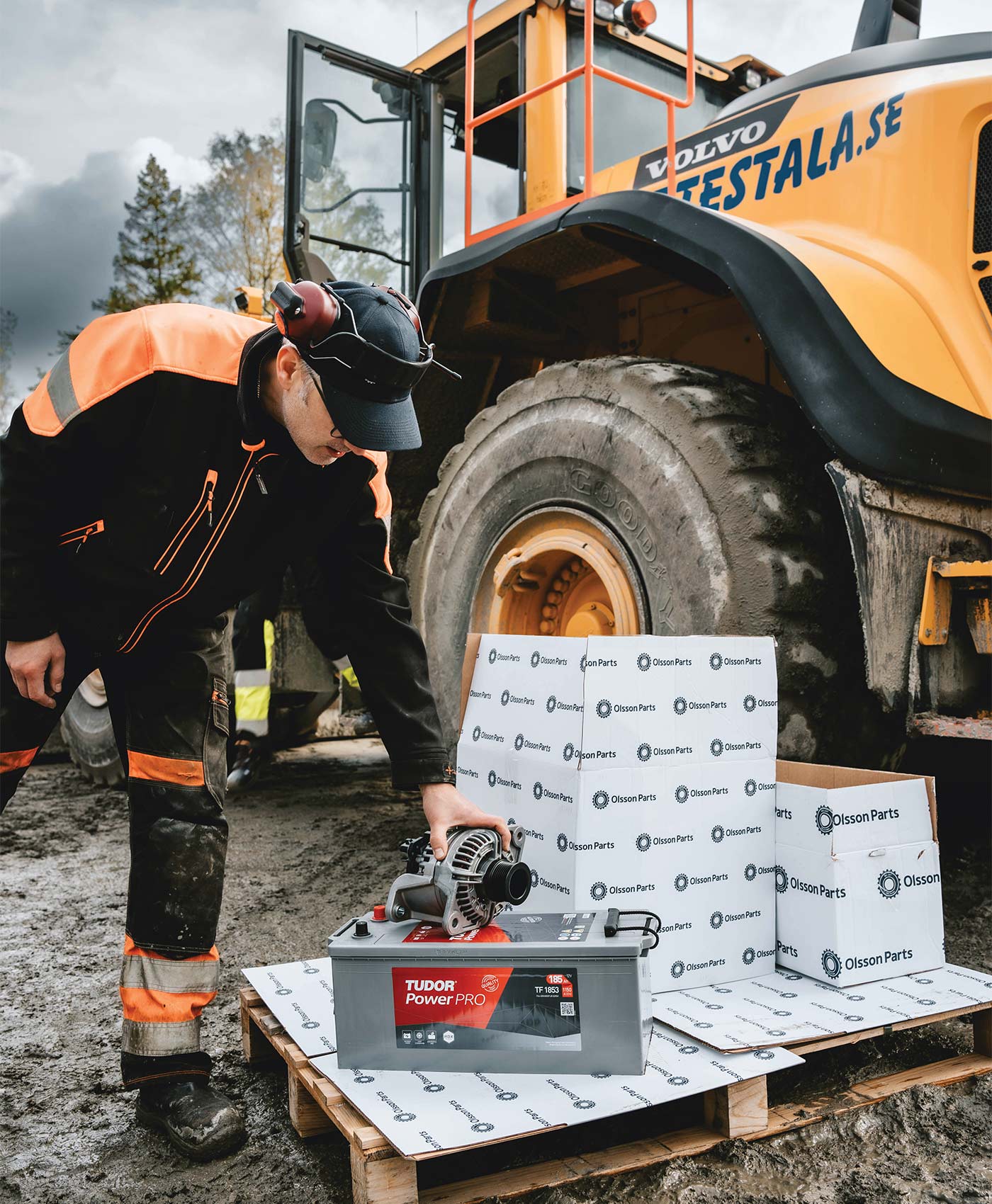
A person picking up an alternator from a pallet placed next to a Volvo wheel loader.

Tips for maintaining an alternator

Alternators are exposed to heavy loads in construction and agricultural environments. Regular maintenance extends their lifespan.

  • Keep the alternator clean
    Blow away dust and dirt regularly – it improves cooling and reduces wear
  • Check the belt and belt tension
    A loose belt results in poor charging. An overly tight belt wears down the bearings
  • Maintain cables and grounding points
    Clean connections, check the B+ cable size and ensure the grounding is in good condition.
  • Avoid overloading
    Do not install more equipment than the alternator can handle. For higher electrical demand – choose a more powerful alternator.
  • Address bearing wear in time
    Noises from the bearings are an early warning – replace them before the damage becomes severe.

How to find the right alternator

At Olsson Parts, you can easily find compatible alternators by:

  • Finding your machine under “Spare parts” and searching by machine model, OEM number or original number
  • Going to the category Electrical system > Alternator
  • Filtering by amperage, connections, pulley type and “Fits to”
  • Comparing the product’s “Fits to models” and “Replaces OEM numbers” with your machine


Find your machine
A person holding a mobile phone displaying the Olsson Parts website.
Find an alternator for your machine

Spare parts for your machine

Tractor Wheel loader Dumper Excavator Marine/Industry

Get news, tips and promotions – straight to your inbox

Subscribe to our newsletter and receive the latest news, promotions, and maintenance tips directly to your inbox. It’s completely free, and you can easily unsubscribe at any time.

FAQ / Frequently Asked Questions – Alternator


How do I know which alternator fits my tractor or construction machine?

You can find the correct alternator by matching the OEM number, machine model and engine type. At Olsson Parts, you can search directly using the OEM number or filter alternators by amperage, connections and “Fits to” lists. Always check the mounting points, pulley type and connector type before purchasing.


Can I upgrade to an alternator with higher amperage than the original?

Yes, as long as the cables – especially the B+ cable – are sized to handle the higher charging current. A more powerful alternator may be necessary if the machine has additional lights, electronics or other electrical consumers.


What symptoms indicate that the alternator is failing?

Common signs include the battery not charging, flickering lights, the battery warning light on the dashboard, unstable electronic behaviour or unusual noise from the alternator. A whining or scraping sound often indicates worn bearings.


How long does an alternator last on a tractor or construction machine?

Lifespan varies depending on workload, environment and maintenance. An alternator that is kept clean, has the correct belt tension and operates in a healthy electrical system can last many thousands of operating hours. Harsh environments, incorrect belt tension or overloading significantly shorten its lifespan.


How do I maintain my alternator to extend its lifespan?

Keep the alternator clean from dust and dirt, check the belt condition and tension, ensure proper grounding and verify that all cables are intact. Avoid overloading the electrical system and replace worn bearings to prevent failures.


How do I test if the alternator is charging correctly?

Measure the voltage across the battery terminals with a multimeter while the machine is running. A functioning alternator should charge at around 13.8–14.5 volts. If the value is lower, there is likely a charging issue.


Do I need to replace the alternator immediately if the battery light turns on?

Not always – the issue may be with the wiring, regulator, belt or grounding. However, the battery light always indicates a charging problem and should be checked immediately to avoid downtime.


What is the difference between a standard alternator and a heavy-duty alternator?

A heavy-duty alternator is built for tougher environments and longer operating periods. It has more robust bearings, better cooling and often higher amperage. It is recommended for construction machines with high load demands or continuous operation.


Do I need to replace the belt when changing the alternator?

It is not mandatory, but recommended. A worn or poorly tensioned belt can cause charging problems even with a new alternator. A new belt ensures optimal performance and reduces the risk of issues.


How do I find the correct alternator if I can’t locate my OEM number?

You can search by machine model, engine type or use the filters at Olsson Parts. If information is missing, you can also identify the alternator by its mountings, pulley and connector type – or contact customer support for assistance.

Do you have a question?


Here we have collected common questions and answers.
Can’t find the answer to your question? Don’t hesitate to contact us! 


FAQ / Frequently Asked Questions

Contact us


Call +46 304‑751070 
Email order@olssonparts.com


Contact us