Back to battery chargers, starter motor and alternator
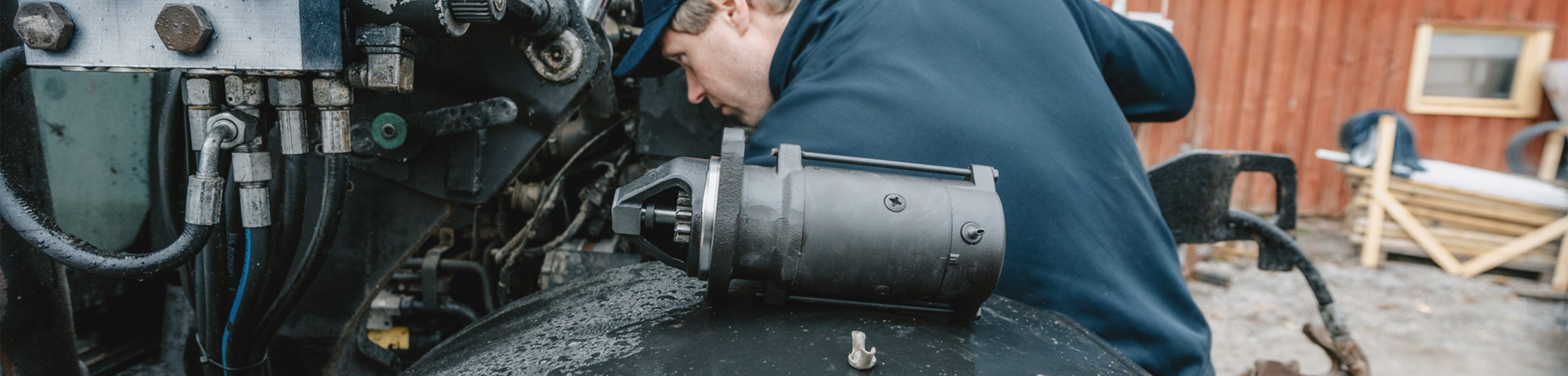
A person working in the engine compartment of a tractor with a starter motor placed beside it.

Buyer's guide

How to choose the right starter motor

A starter motor that performs as it should is crucial for ensuring that the machine starts immediately and can handle tough working conditions. In this guide, we go through the most important things to consider when choosing a new starter motor for a tractor, excavator, wheel loader or other machinery. With the right starter motor, you get a machine you can rely on.

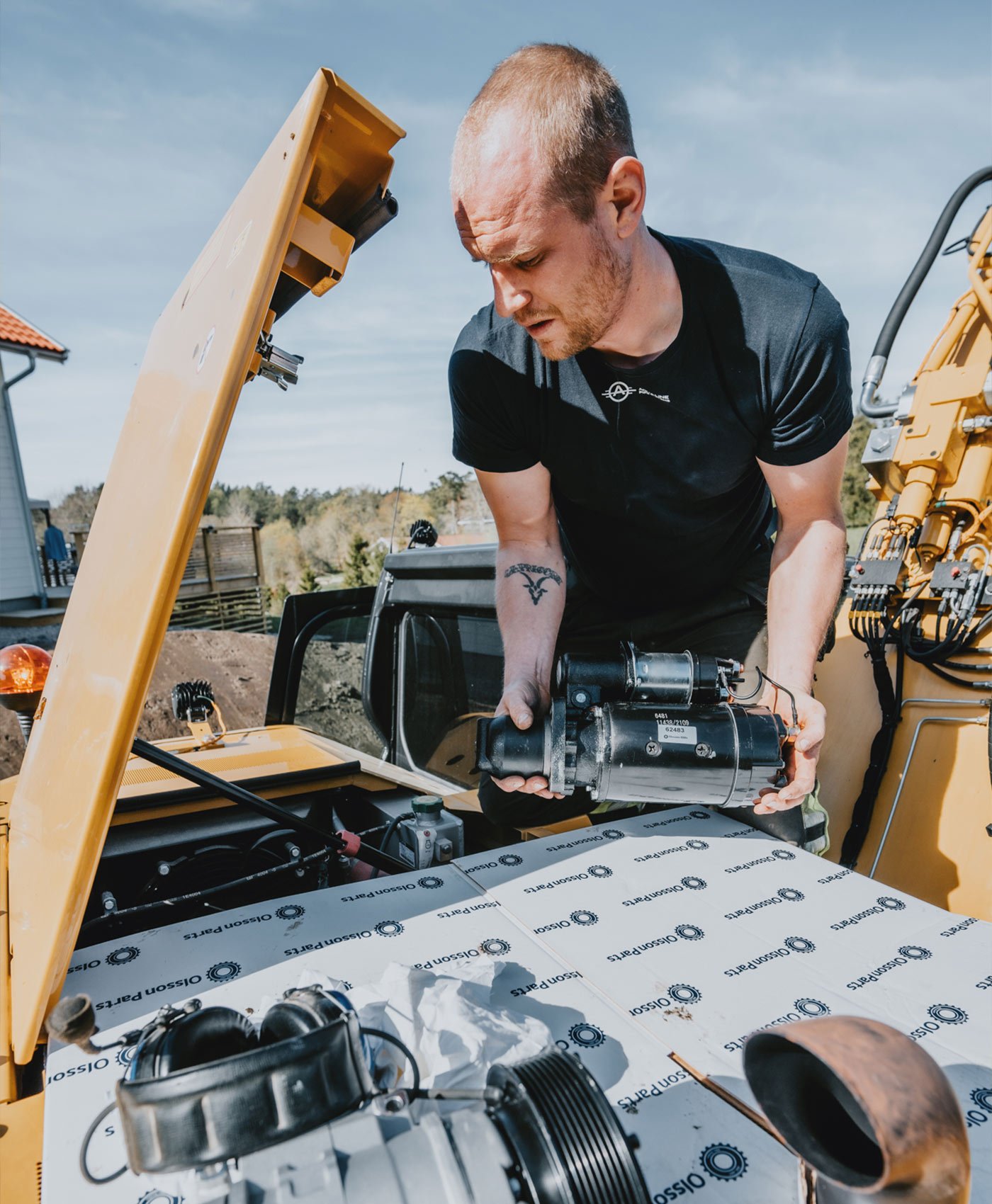
A person installing a starter motor in the open engine compartment of a Caterpillar excavator.

When does a starter motor need to be replaced?

The starter motor cranks the combustion engine by converting power from the battery into mechanical force. When functioning properly, the machine starts quickly, even in cold conditions or under heavy load.


Common signs that the starter motor needs replacement:

  • Clicking sounds without the engine turning over
  • Slow or sluggish starting, especially in low temperatures
  • Slipping or irregular engagement in the Bendix gear
  • Overheating or a burnt smell
  • The machine starts sometimes – and sometimes not


If the battery and cables have been checked and are functioning correctly, the starter motor is often the component that needs to be replaced.


How to identify the correct starter motor

A correctly matched starter motor is essential for ensuring that the machine operates reliably. There are three key areas to check:


OEM number and machine model

The safest way to find the correct part is to start with:

  • OEM number on the existing starter motor
  • Machine model, engine version and model year
  • Manufacturer reference/part number


Since multiple engines are often used in the same machine model, OEM information is crucial to avoid ordering the wrong part.

Electrical specifications

The most important values you need to verify:

  • Voltage: 12 V or 24 V
  • Power: starting power rated in kW
  • Direction of rotation: clockwise or counterclockwise


A starter motor with too little power may struggle to start large diesel engines, especially in construction machinery.

Mechanical dimensions and mounting

To ensure the starter motor fits correctly, check:

  • Mounting points and centre distances
  • Number of teeth on the gear
  • Shaft length and attachment type
  • Type of gearbox or bell housing


Even small differences in dimensions can prevent the starter motor from being installed correctly.

Tips for longer service life

The lifespan of a starter motor is strongly influenced by the condition of the rest of the electrical system. Regular maintenance reduces the risk of unplanned downtime and extends the component’s operating life.


  • Check the battery’s condition – a weak battery forces the starter motor to work harder and increases the risk of overheating
  • Inspect cables and connections – poor grounding points, corrosion or damaged cables create resistance that wears on the starter motor
  • Avoid long starting attempts – let the starter motor rest between attempts to prevent heat buildup
  • Replace worn parts in time – the solenoid and Bendix gear can be replaced separately and are often the first components to wear out
  • Keep the electrical system clean and dry – moisture, dirt and oil can cause electrical issues that indirectly affect the starter motor’s performance


Small measures can make a big difference – especially for machines used daily or in demanding environments.


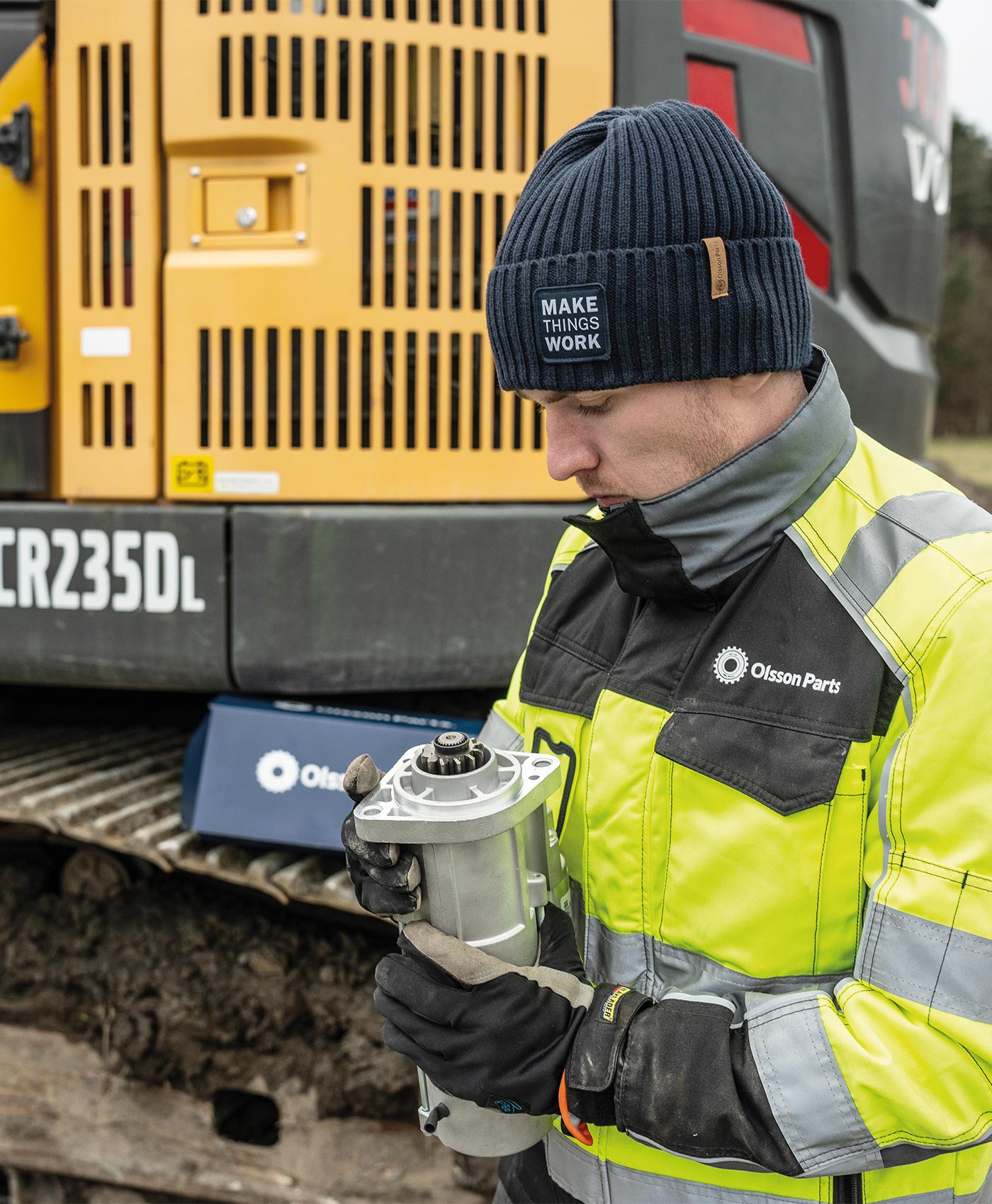
A person holding a starter motor in front of a Volvo excavator.

A smooth choice at Olsson Parts

When you need to find the right starter motor, we make the process simple and reliable. At Olsson Parts, you can search directly by OEM number, machine model or filter by voltage, kW and fitment to quickly find compatible options. Each product has clear specifications, images and comparison data, making it easy to verify that you are choosing the correct part.


We also offer:

  • Wide selection from well-known manufacturers
  • Secure payment with several payment options
  • Technical support if you need help identifying the correct model


With the right starter motor and the right information, it becomes easy to keep your machine reliable and ready to start all year round.

Find a starter motor for your machine

Spare parts for your machine

Tractor Wheel loader Dumper Excavator Marine/Industry

Get news, tips and promotions – straight to your inbox

Subscribe to our newsletter and receive the latest news, promotions, and maintenance tips directly to your inbox. It’s completely free, and you can easily unsubscribe at any time.

FAQ / Frequently Asked Questions – Starter Motor


How do I know if the starter motor is the problem and not the battery?

If the machine clicks but doesn’t start, or starts slowly even though lights and electronics work normally, the starter motor is often the cause. If everything dies during the start attempt, it usually indicates a weak or discharged battery. It’s always a good idea to begin by measuring the battery and checking cables and grounding points.


Can I use a starter motor with higher kW than the original?

Yes, in most cases this works fine – a more powerful starter motor can even improve starting performance, especially in cold weather or on large diesel engines. The important thing is that the mechanical fitment and electrical values (voltage, rotation direction, gear) are correct.


How do I find the correct starter motor for my machine?

The easiest way is to search using the OEM number from your existing starter motor. You can also search by machine model, engine version or manufacturer reference. At Olsson Parts, you can additionally filter by voltage, kW and fitment.


What symptoms indicate that the starter motor needs replacing?

Common signs include clicking sounds, sluggish starting, slipping gears, uneven operation or overheating. If the battery is fully charged and cables are properly connected, these symptoms often point to a failing starter motor.


What is the difference between a standard starter motor and a gear-reduction (planetary) starter motor?

A gear-reduction starter motor is more compact, more efficient and requires less current while delivering high starting power. It is common in construction machinery and machines with high load demands. Standard starter motors are simpler in design and often cheaper, but work well where loads are lower.


How many teeth should my starter motor gear have?

The number of teeth varies between engines and is a critical part of compatibility. Choosing the wrong number of teeth can prevent the starter motor from engaging the flywheel correctly. Always compare with your existing starter motor or verify the specification using the OEM number.


Can I replace the starter motor myself?

Yes, on many machines it is possible to replace it yourself. Remember to always:

  1. Disconnect the battery before starting the work
  2. Document the cable connections
  3. Check grounding points during reinstallation

If access is limited or if you are unsure, professional assistance is recommended.


How long does a starter motor last?

Lifespan varies depending on usage, machine type and maintenance. A starter motor used in harsh environments or together with a weak battery will wear out faster. With a healthy electrical system, good wiring and regular checks, a starter motor can function for many years.


What affects the price of a starter motor?

The price is influenced by:

  • Power output (kW)
  • Type of motor (standard or gear-reduction)
  • Manufacturer
  • Fitment and machine requirements

A more expensive starter motor can offer greater reliability, especially for machines used professionally or in extreme conditions.


Do I need to replace the solenoid at the same time?

Many starter motor problems are caused by worn solenoids. If the starter motor is older, it may be wise to replace the entire unit. Some solenoids are available separately, but if the starter motor shows additional signs of wear, a complete replacement is recommended.

Do you have a question?


Here we have collected common questions and answers.
Can’t find the answer to your question? Don’t hesitate to contact us! 


FAQ / Frequently Asked Questions

Contact us


Call +46 304‑751070 
Email order@olssonparts.com


Contact us