FAQ / Frequently asked questions and answers
Which hydraulic products are used in a log splitter?
A hydraulic log splitter uses several components to create and control the splitting force. Common parts include hydraulic valves, cylinders, hoses, and couplings that together control the oil flow and drive the splitting process.
What does a valve do in a hydraulic log splitter?
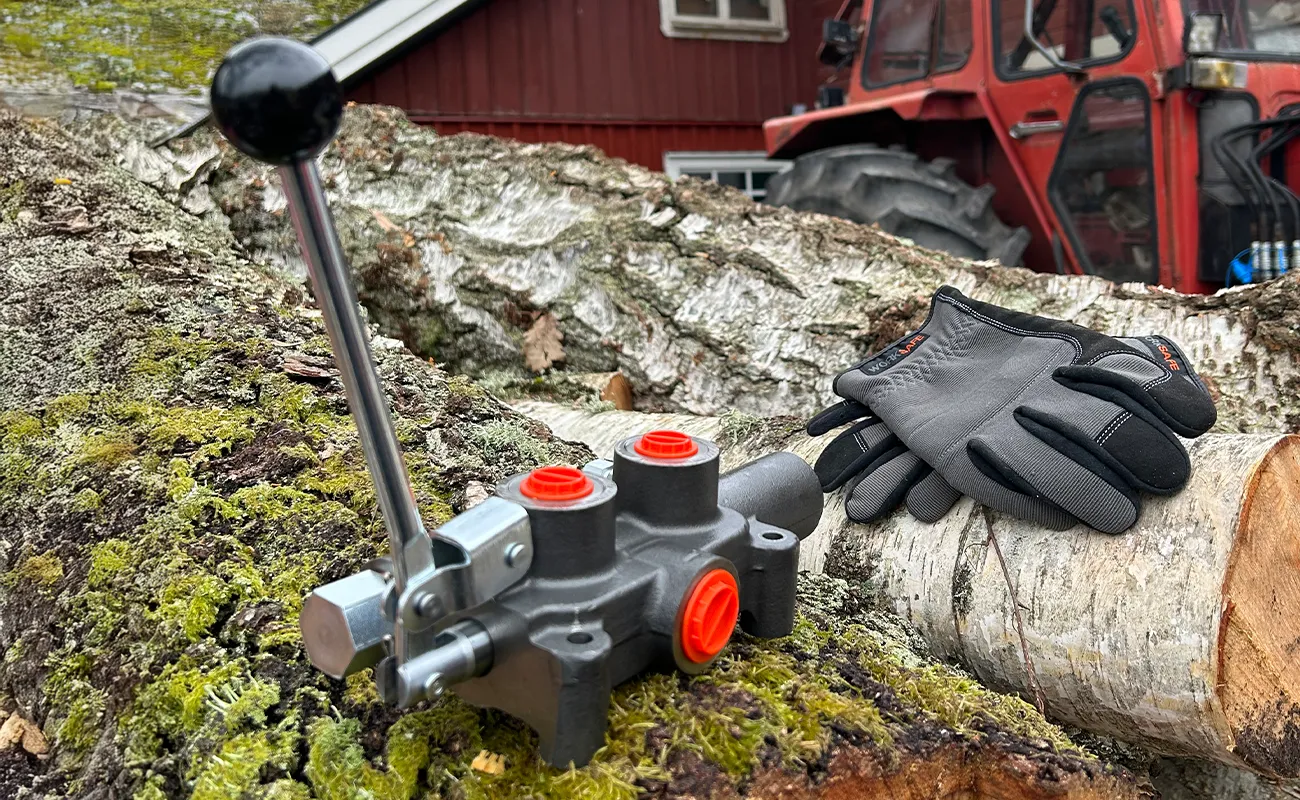
The valve controls how the hydraulic oil flows in the system and determines when the cylinder should move forward or backward. This allows you to control the splitting motion and work both safely and efficiently.
When do you need to replace hydraulic parts in a log splitter?
Hydraulic components are exposed to high pressure and loads. If the log splitter starts moving more slowly, leaking oil, or not responding as it should, it may be a sign that a valve or another hydraulic component needs to be replaced.
Do the hydraulic parts fit different types of log splitters?
Many hydraulic components are universal and can be used on different types of log splitters and hydraulic equipment. The important thing is to choose parts that handle the correct pressure, flow, and connections for your equipment.
Do you offer hydraulic oil for log splitters?
Yes, we offer hydraulic oil suitable for hydraulic systems in log splitters and other hydraulic machines. The right hydraulic oil helps reduce wear, ensure smooth operation, and protect system components under high loads. View our range here.
What should you consider when choosing hydraulics for a log splitter?
Make sure the components are designed for the correct working pressure and flow. Proper dimensions and connections ensure the system works as intended and reduce the risk of leaks or operational disruptions.
Why are quality components important in a log splitter?
Log splitting involves high forces and repeated stress on the hydraulics. Robust and reliable hydraulics contribute to smoother operation, longer equipment lifespan, and reduced risk of downtime.