25 March 2026
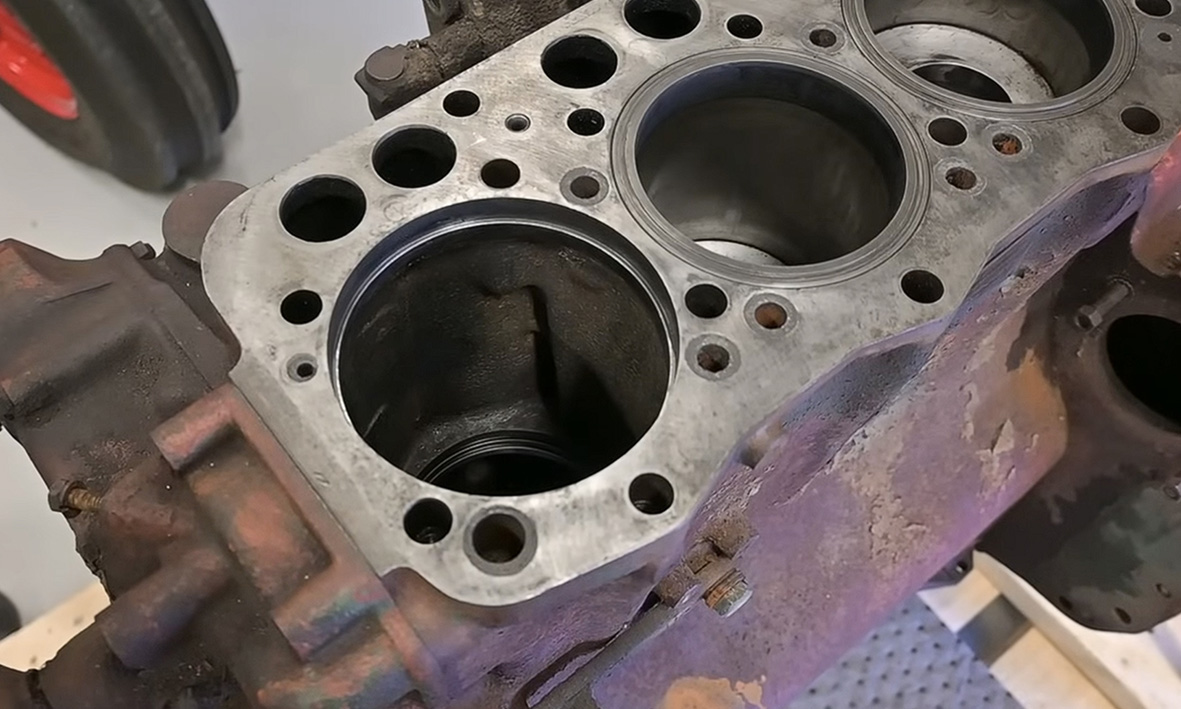
Liner shimming – how to fine-tune your engine like a pro
"Liner shimming is something many machine owners can do themselves - as long as you measure carefully and know what values you need," says Tommy Abrahamsson, senior technical adviser at olsson Parts.
It's basically about ensuring that the cylinder liners are raised to exactly the right height in the engine block - a detail that can make a large difference to the engine's performance and service life. Over time, wear and tear or an engine overhaul may mean that the height needs to be adjusted.
"If the cylinder liner is too low, you get leaks, and if it's too high, you can have problems with the cylinder head gasket not holding," Tommy explains.
By using shims - thin washers of different thicknesses - under the liner, you can adjust the height exactly to the engine manufacturer's specifications.
Measurement is the key
Tommy starts by measuring the cylinder liner height in several positions round the liner with a dial gauge.
- It's important to measure in several places and always start from the highest value. Then you know how much shim you need," he says.
Shims are available in several different thicknesses and can be combined to achieve the desired measurement. When the right thickness is chosen, the cylinder liner is lifted rod, shims are put in place and the liner is put back. A new measurement is then taken to ensure that the height is correct.
"You shouldn't take any chances here, but measure, adjust and measure again until it's perfect," emphasises Tommy.
Final check
Once the measurements are correct, the cylinder liners are fitted with gaskets and seals according to the manufacturer's recommendations.
"If you take the time to do it carefully, you avoid problems later and the engine will last longer," says Tommy.
Important elements to consider during liner shimming
- Follow the engine manufacturer’s specifications regarding the cylinder liner height.
- Always measure at several points around the cylinder liner.
- Work on the basis of the highest measured value.
- Use shims of the correct thickness – combine multiple shims if necessary.
- Check the measurements after each adjustment.
- Install with the correct gaskets and seal.