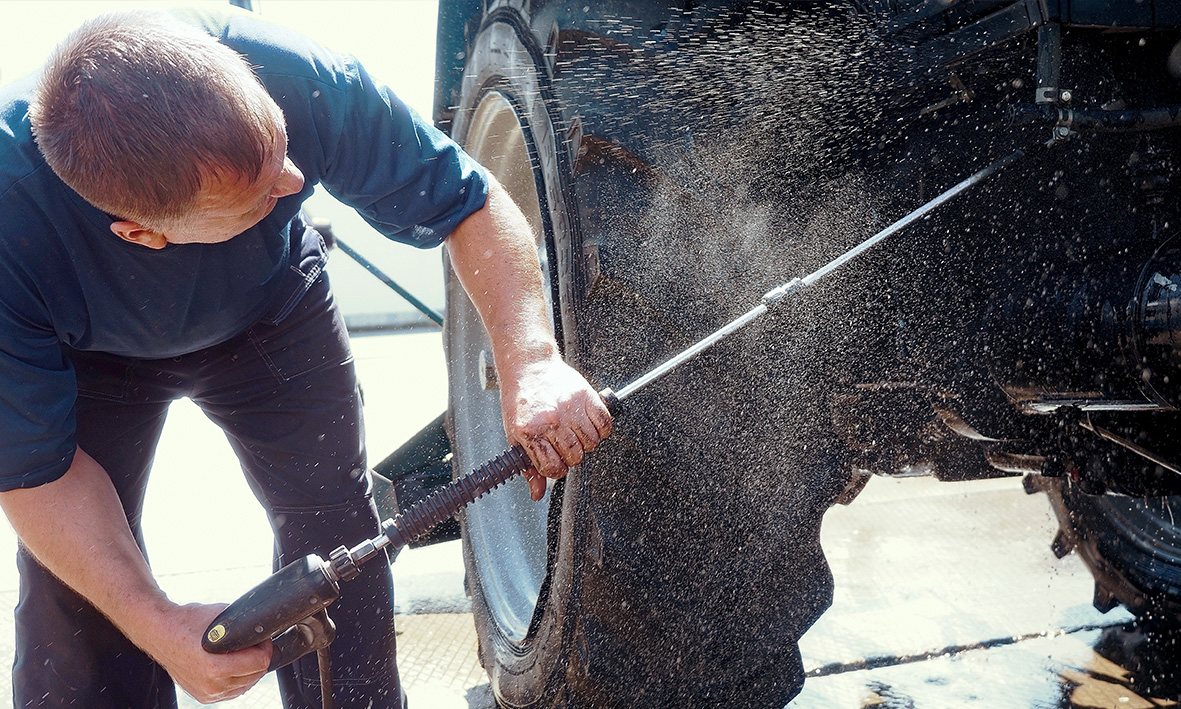
Washing your construction machinery and tractor - how to do it right
Washing an excavator or tractor may seem like a single operation. A little water, a little degreasing - clear. But in practice, cleaning is an important part of maintenance, and when done correctly, it can both extend the life of the machine and reduce the risk of downtime.
– Many people see cleaning as something purely cosmetic, but it's actually a way of both extending the lifespan and detecting problems in time. You should see washing as a split of maintenance, says Fredrik Vikström, range developer at Olsson Parts and well versed in both products and washing methods.
Wash with the right method
High-pressure washing is effective but can also cause damage if used incorrectly. Water forced ina bearings, seals or electrical components can lead to problems that are not immediately visible. Therefore, work methodically: start from the top and work downwards, and avoid aiming the jet directly at sensitive parts such as hydraulic couplings, bearings and electrical connectors. Also, allow the machine to cool down before washing - rapid temperature changes can adversely affect materials and components.
– A high pressure washer is a good tool but it should be used with respect, says Fredrik.
Select the right cleaner
Water alone is rarely enough, especially in harsh environments. Oil film, asphalt, dust and soil require different types of degreasing. Cold degreasing works best against oil and asphalt, while alkaline agents dissolve soil, dust and organic dirt. In many cases, a combination is most effective - first cold degreasing on dry surfaces, then alkaline degreasing on top.
– Match the agent to the dirt. This will give you better results without having to apply more than necessary.
Always leave the product to work according to the instructions on the pack, but avoid letting it wipers ina. Washing in direct sunlight is not recommended.
– It makes it more difficult to control the process. Instead, wash a limited split or the side of the vehicle at a time.
Focus on the right areas
Not all splits need the same attention. On construction machinery, the underbody and any caterpillars are particularly vulnerable. This is where dirt accumulates and can increase both weight and wear. On tractors, radiators and air intakes are often critical. If these become clogged with mud and other dirt, cooling is directly affected. Leads and bushings are also important to keep clean. Dirt that remains there effectively acts as an abrasive.
Take the opportunity to inspect
When the machine is clean, it is much easier to detect faults. Oil leaks, cracks, worn hoses or loose components are more visible when the dirt is gone. A quick check at this stage can save you time and money at the front.
Don't forget the aftercare
After washing, always lubricate the machine immediately. Moisture easily penetrates into the joints and moving parts, but lubrication squeezes the water out while protecting the machine from wear and corrosion.If you miss the lubrication, the wash can in the worst case do more harm than good, says Fredrik, and advises that if you start the machine and let it run for a short time after lubrication, you will get rid of the moisture that remains.
Think about the environment
Washing a construction machine, tractor or car is not just about the result - it's also about what happens to what runs off. Washing water often contains oil, grease and particles from the dirt, and it is this that has the large environmental impact - not the cleaner itself. It is therefore important to wash in a place where the water is properly treated, such as a laundry room or an area with an oil separator. Otherwise, there is a risk of spreading pollution to both soil and water bodies.
– Washing properly is not just about cleaning your machine. It's about taking responsibility the whole way," concludes Fredrik.
WHEN DO YOU USE WHAT?
Oxide dissolver (fly rust remover)
Removes metal particles such as brake dust, fly rust and iron particles.
Cold degreasing
Removes tar and other petroleum-based dirt.
Alkaline degreasing
Dissolves organic dirt such as mud, insects, algae and moss.
Foam degreasing
A gentle alkaline degreaser in foam form that lifts dirt from the surface.
Rim acid
Extra strong agent for stubborn dirt and oxidation - use with caution.
Shampoo (car shampoo)
Used for hand washing and comes in several flavours:
- pH neutral for extra gentle washing
- strong/alkaline for deep cleaning
- wax shampoo for extra shine
- coating shampoo for extra protection
Special products
- Asphalt remover / tar remover
- Insect remover
- Field cleaner (pH neutral)
- Glass cleaner
- Fast wax
- Engine degreasing
WASH SINGLE STEP BY STEP
- Apply rim cleaner (fly rust remover), cold degreasing and alkaline degreasing. Leave on for a few minutes before coiling. Coil from the bottom up.
- Shampoo with a good shampoo. Do not use a sponge, but rather a microfibre cloth or washing glove to avoid grit getting into the sponge and scratching the paint.
- Rinse thoroughly from top to bottom to remove all dirt and chemicals. Take extra care around strips, joints and other places where dirt easily collects.
- Wipe with a clean cloth or chamois to avoid water stains.
- If possible, bladder water from mirrors, badges and nooks and crannies with compressed air.
- If necessary, apply paint protection, wax or quick seal to protect the surface and make future washing easier.
- Finish by cleaning the windshields and checking the results - a clean surface makes it easier to spot scratches, stone chips or other damage.
Keep this in mind when washing tractors and construction equipment
- Safety first - switch off and let the engine cool down
- Proper high pressure - avoid bearings, electrics and hydraulics
- Degrease properly - on oily splits, leave on
- Clean thoroughly - radiator, undercarriage and lubrication points
- Take the opportunity to inspect - look for damage and leaks
- Think about the environment - wash properly and avoid spillages
- After washing - lubricate and run the machine short