 Back to all buyer's guides
How to choose the right filter for your tractor and construction machine
The right filter is one of the most cost-effective investments you can make for your machine. In this guide, we help you choose, replace and maintain filters correctly.
Click the button and select vehicle, make and model to see filters that fit your machine.
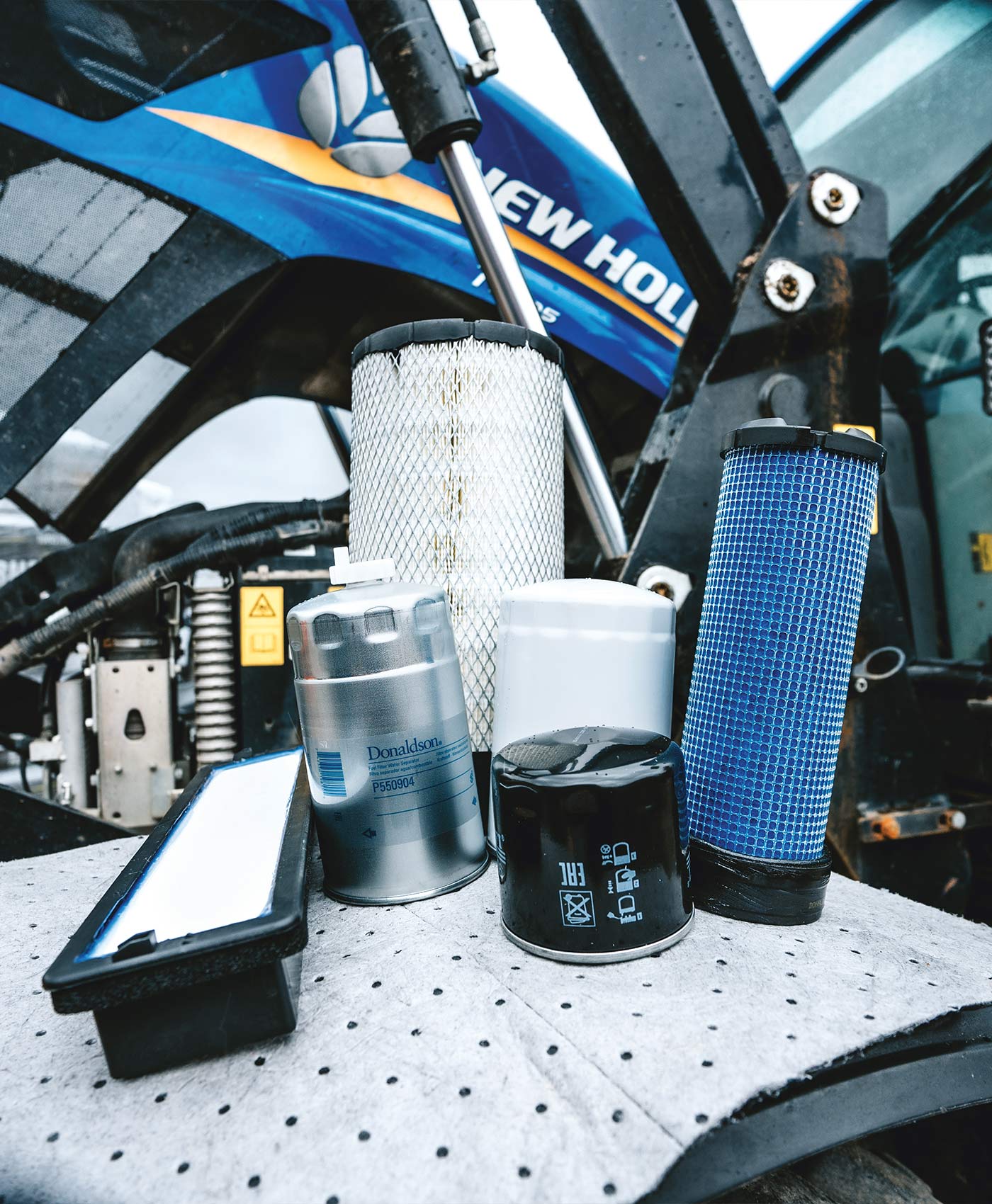
Filter types – what does each one do?
Air filter
Stops dust and particles from reaching the engine. Critical in dusty environments such as fields and construction sites.

Check often – replace when needed
Oil filter
Cleans the engine oil and reduces wear on moving parts. Should be replaced at every oil change.
At every oil change
Fuel filter
Protects the injection system from dirt and water. A clogged filter causes starting problems and uneven running.
According to the service interval
Hydraulic filter
Keeps the hydraulic oil clean and ensures that valves and pumps work correctly under pressure.
Follow the hydraulic interval
Cabin filter
Cleans the air inside the cab. Improves the operator environment and reduces exposure to dust and exhaust fumes.
Seasonally or when needed
Troubleshooting guide – which filter is causing the problem?
| Symptom | Suspected filter | Cause |
|---|---|---|
| Reduced engine power | Air filter Fuel filter | Lack of air or fuel causes the engine to lose power |
| Increased fuel consumption | Air filter Fuel filter | Incorrect air/fuel mixture reduces efficiency |
| Engine difficult to start | Fuel filter Air filter | Dirt or water in the fuel disrupts combustion |
| Irregular hydraulics | Hydraulic filter | Dirt in the hydraulic oil affects valves and pressure |
| Poor air quality in the cab | Cabin filter | A clogged filter reduces airflow and filtration |
Step by step – How to choose the right filter
Remember: Always start by checking the filters before you begin working on the rest of the machine. Surprisingly often, that is where the solution is hidden.
1. Identify the machine’s make, model and model year
The filter must match exactly – the wrong dimension can cause leakage or insufficient filtration.
2. Check the service interval in the machine documentation
The manufacturer’s recommendations are the starting point – in dusty environments, shorter intervals may be needed.
3. Choose a filter with the correct specification, not just the right shape
The quality of the filtration is rarely visible immediately – but after a few hundred hours, the difference becomes clearly noticeable.
4. Buy all filters that need replacing at the same time
Oil filter + air filter + fuel filter are often replaced during the same service – plan the purchases together.
5. Document replacements and operating hours
A simple log in the service book makes it easier to keep track of the next replacement.
Checklist – How to keep track of your filters
- Replace the oil filter at every oil change
- Check the air filter regularly, especially in dusty environments
- Replace the fuel filter according to the service interval
- Drain the water separator when needed
- Follow the interval for the hydraulic filter
- Replace the cabin filter for a better working environment
- Use filters with the correct specification and quality
- Document replacements and operating hours
Tinkering tips with Olsson Parts – Changing oil and filters on a Case tractor
Tractor mechanic Stefan Hildingsson shares tips and tricks and shows what is especially important to keep in mind when changing filters and oil on your tractor. He demonstrates on his CASE IH MXM 155 PRO, but the tips and advice are directly applicable to all tractors and models.
Tinkering tips with Olsson Parts
Filter kits for your machine

Get news, tips and promotions – straight to your inbox
Subscribe to our newsletter and receive the latest news, promotions, and maintenance tips directly to your inbox. It’s completely free, and you can easily unsubscribe at any time.
FAQ / Frequently asked questions and answers about filters
Can I replace filters myself or do I need a mechanic?
Most filter replacements are easy to carry out yourself with basic hand tools. Air filters and oil filters are usually easily accessible. Hydraulic filters require you to relieve the pressure in the system first.
Does it matter which brand of filter I choose?
Quality and the correct specification are crucial – especially in demanding environments. The difference is rarely visible immediately, but after several hundred operating hours it becomes clearly noticeable on the machine.
How do I know if a filter is clogged?
Common signs include reduced engine power, increased fuel consumption, difficulty starting the engine or irregular hydraulics. Do not wait for symptoms – replace preventively according to the service schedule.
How often should the air filter be replaced on a tractor?
It depends on the environment. In dusty conditions, such as ploughing or working on dry roads, the filter may need to be inspected after every working day. Follow the machine manufacturer’s recommendations and shorten the interval in tough conditions.
What happens if I run for too long with a clogged fuel filter?
Over time, dirt and water in the fuel can reach the injection system and cause serious damage to the injection pump and nozzles – repairs that can become very costly. A fuel filter is inexpensive compared with what it protects.
Do I need to replace the hydraulic filter even if the machine seems to be working normally?
Yes. Contaminants in the hydraulic oil do not always show immediate symptoms until the damage has already been done. Valves, pumps and cylinders wear from the inside due to particles that a worn-out filter can no longer capture.
Can I use the same filter for different machines if they look the same?
No, not without checking the specification. Filters that look identical can have different filtration ratings, pressure classes or flow capacities. Always use the filter reference for your specific machine and model year.
What is a water separator and when should it be drained?
A water separator is often combined with the fuel filter and collects water present in the diesel. It should be checked regularly and drained when the water level reaches the mark – otherwise, water in the fuel system can cause corrosion and starting problems.
How do cold temperatures affect the filters on a tractor?
In cold weather, water in the fuel filter can freeze and completely block the fuel flow. Use winter diesel and check the water separator extra carefully during autumn and winter. Hydraulic oil also becomes thicker in the cold, which increases the load on the hydraulic filter during cold starts.
Do you have a question?
Here we have collected common questions and answers.
Can’t find the answer to your question? Don’t hesitate to contact us!
FAQ / Frequently Asked Questions