 Back to all buyer's guides
How to choose the right hydraulic filter for your tractor
The hydraulic filter is a small part with a big job. It keeps the hydraulic oil clean, so the three-point linkage, front loader and implements work as they should. In this guide, we explain how to find the right hydraulic filter for your tractor, which types of hydraulic filters are available and when it is time to replace the filter. The guide applies whether you drive an Massey Ferguson or a newer John Deere.
Quick guide (for those who want the answer straight away)
To choose the right hydraulic filter for your tractor, you need to know the machine model, the original part number and the correct filter type.
- Find out the make, model and, if possible, the year of manufacture
- Look up the original part number on the old filter or in the operator's manual
- Check whether it is a return filter, pressure filter or suction filter
- Compare dimensions, thread and filtration rating
- Search for your model at Olsson Parts and choose the filter that fits
Why is the right hydraulic filter important?
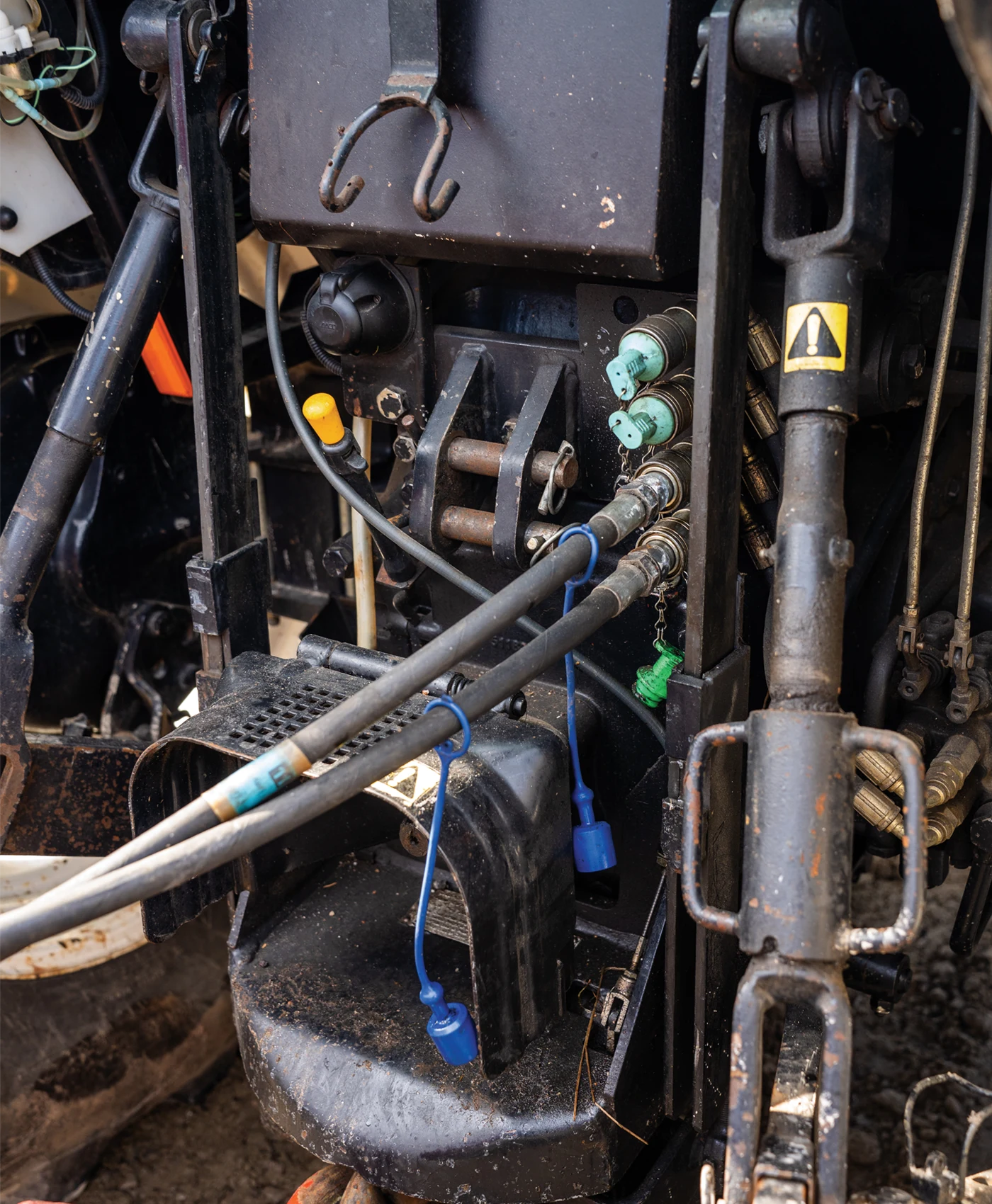
The hydraulic oil does a heavy job in the tractor. It powers the three-point linkage, the front loader and the external hydraulic outlets, and on many tractors the same oil also lubricates the gearbox and rear axle. Small particles from wear and dirt are constantly carried around the system with the oil. The hydraulic filter catches them before they reach the pump, valves and cylinders.
The wrong hydraulic filter can cause:
- Reduced hydraulic performance
- Increased wear on the pump and valves
- Risk of downtime in the middle of the season
The right filter keeps the hydraulic system working at its best. It is also much cheaper than replacing a hydraulic pump.
What types of hydraulic filters are there?
A tractor can have several hydraulic filters, located in different parts of the system. That is why it is important to know which filter you need to replace.
Return filter
The return filter sits on the line where the oil flows back to the tank. It is the most common type on tractors and catches dirt that the oil has picked up from cylinders and implements.
Pressure filter
The pressure filter sits after the pump, where the pressure is highest. It protects sensitive valves and must withstand high pressure. A standard filter cannot replace a pressure filter.
Suction filter
The suction filter sits before the pump and protects it against larger particles. It is often a strainer or a coarse filter in the tank or gearbox housing. A clogged suction filter can make the pump noisy.
Breather filter
The breather filter sits on the tank and lets air in when the oil level changes, without letting dust in. It is often forgotten but is cheap to replace.
Step by step: choose the right filter
1. Identify the machine
Start with the make and model, for example Massey Ferguson 135, John Deere 6120 or New Holland T6. The same model can have different filters depending on the year and equipment, so it is a good idea to note the year of manufacture and serial number. You will find them on the tractor's rating plate.
2. Find the original part number
The original part number is the most reliable reference. It is often printed on the old filter and can be found in the operator's manual or the parts catalogue. With the original part number, we can find a filter that matches the original.
3. Check the filter type
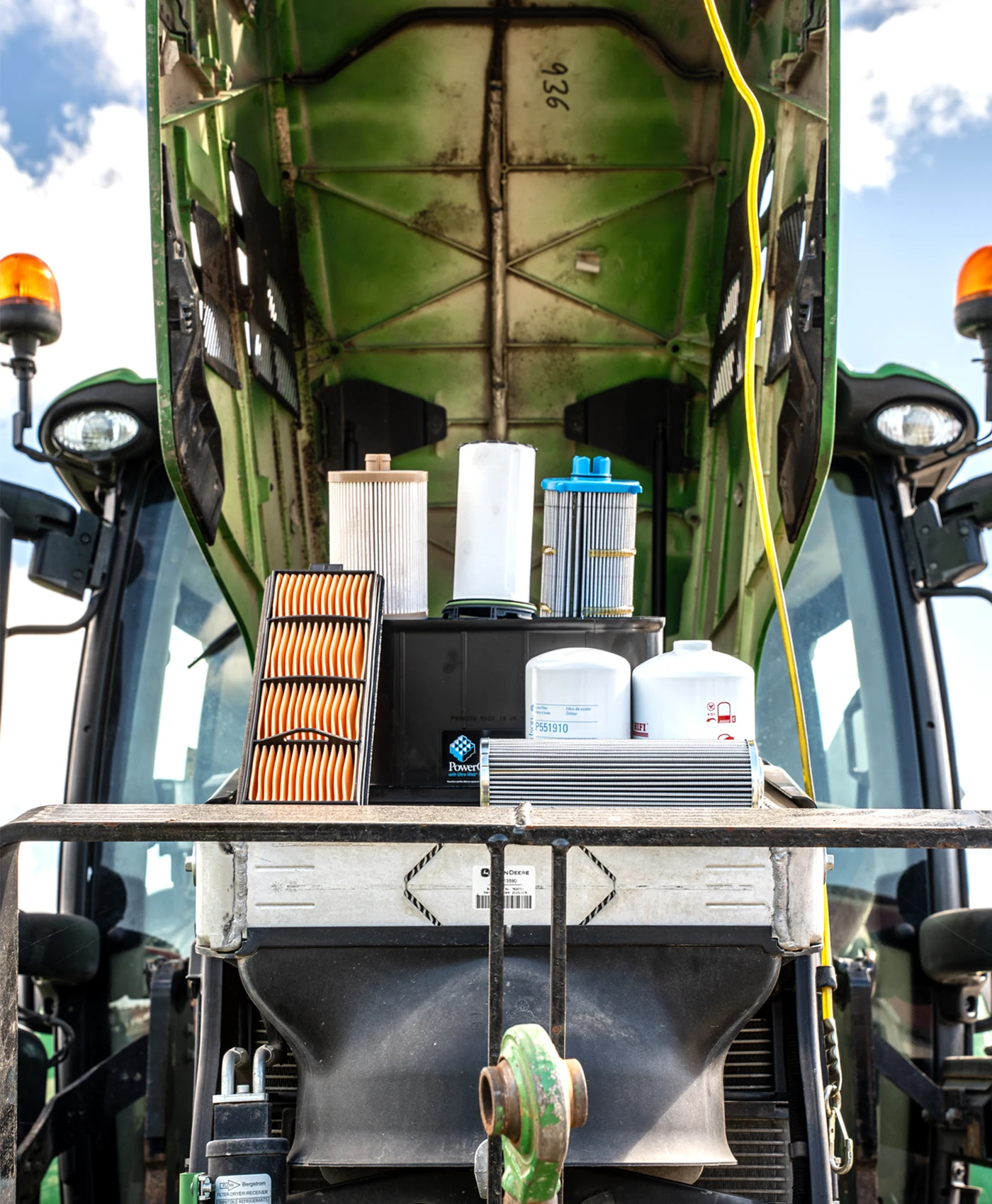
Look at where the filter is located. On the return line it is a return filter, after the pump a pressure filter and before the pump a suction filter. Also check whether it is a spin-on filter or a filter element that sits in a filter housing.
4. Check the specifications
Compare the new filter with the old one:
- Flow capacity
- Filtration rating (stated in micrometres, µm)
- Pressure rating
- Dimensions, thread and seal
When should the hydraulic filter be replaced?
Always follow the interval in your tractor's operator's manual. The hydraulic filter is often replaced at the same time as the hydraulic oil or during a major service. Replace it sooner if the tractor works hard, operates in dusty conditions or runs a lot of implements that draw oil from the tractor.
Signs that the filter may be clogged:
- The linkage and front loader move slowly or jerkily
- The pump is noisier than usual
- The hydraulic oil runs hotter than normal
- The hydraulic filter warning light comes on, on tractors that have one
Select your model
Common mistakes
Wrong size
The filter looks the same but has the wrong thread or length.
Ignoring the original part number
Choosing a filter by its appearance is the most common reason for buying the wrong part.
Buying a universal filter
A universal filter may fit physically but have the wrong filtration rating or pressure rating.
Forgetting the seal
Always lubricate the seal with a little clean oil before fitting.
Hydraulic filters for different tractor brands
Olsson Parts has hydraulic filters for most tractors used in the Nordic countries. Can't find the original part number? Select your model in the search field to see the filters that fit your tractor.
New Holland
We have hydraulic filters for New Holland tractors, for example the T6 series. These tractors often work hard and need regular servicing.
Massey Ferguson
From the classic MF 35 and MF 135 to newer models. Combine it with our guide on how to change the oil on a Massey Ferguson.
John Deere
Hydraulic filters and transmission filters for John Deere tractors, both older and newer models.
Valtra, Case IH and more
We also have filters for Valtra, Case IH and many other brands. Search for your model to find the right one.
Take a look at our tinkering tip where Tommy services the hydraulic system on a Volvo BM 650. The video is in Swedish, but you can turn on English subtitles by clicking the CC button in the video. See all our tinkering tips here.
Popular tractor brands
FAQ / Frequently asked questions
What types of hydraulic filters are there?
A tractor can have a return filter, a pressure filter and a suction filter, and often a breather filter on the hydraulic tank. They sit in different places in the system, so check which one you need to replace.
How often should you change the hydraulic filter on a tractor?
Follow the interval in the operator's manual. The filter is often changed together with the hydraulic oil, and more often if the tractor works hard or in dusty conditions.
How do I change the hydraulic filter on my tractor?
Lower all implements and relieve the pressure in the system. Clean around the filter, remove the old one and lubricate the seal of the new filter with a little clean oil. Tighten it by hand, then check the oil level and look for leaks.
Where do I find the original part number for my hydraulic filter?
The number is usually printed on the old filter. Otherwise you will find it in the operator's manual or the parts catalogue. You can search for the number directly in our search field.
Can I use a universal hydraulic filter?
Only if it matches all specifications exactly: dimensions, thread, filtration rating and pressure rating. A filter that is too small can restrict the oil flow, so it is better to start from the original part number.
What micron rating should a hydraulic filter have?
Always choose the same filtration rating as the original filter. The right value depends on the hydraulic system, and the original part number tells you which filter to choose.
How do I know if the hydraulic filter is clogged?
Common signs are slow or jerky hydraulics, a noisier pump and hotter oil than usual. Some tractors also have a filter indicator or warning light.
Should I change the hydraulic oil at the same time?
It is often a good idea. A new filter in old, dirty oil clogs up quickly.
Do you have customer service staff who speak my language?
Yes. Our customer service team speaks Swedish, Danish, English, Finnish and German. We are happy to help you order the right parts for your tractor.

Get news, tips and promotions – straight to your inbox
Subscribe to our newsletter and receive the latest news, promotions, and maintenance tips directly to your inbox. It’s completely free, and you can easily unsubscribe at any time.
You might also like


Do you have a question?
Here we have collected common questions and answers.
Can’t find the answer to your question? Don’t hesitate to contact us!
FAQ / Frequently Asked Questions