 Back to all buyer's guides
Three-point hitch – choose the right parts for your tractor's 3-point linkage
The three-point hitch is where the tractor and the implement meet. When the top link, lower link arms, implement pins and linch pins have the right category and size, the implement sits firmly and can be adjusted precisely. In this guide we go through the 3-point hitch parts, the dimensions for category 1–3 and how to find the right part for your tractor.
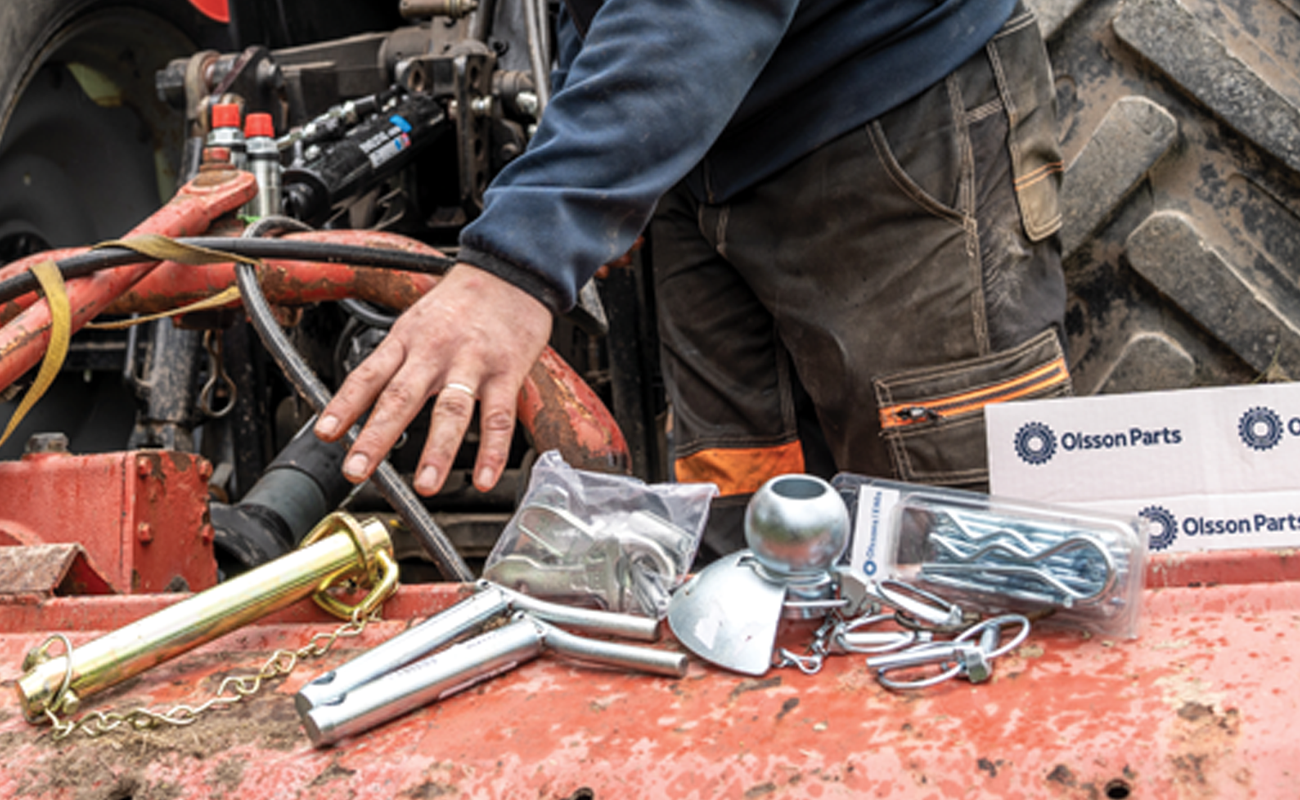
How do I choose the right parts for my three-point hitch?
The category of your tractor and implement decides which 3-point hitch parts fit. Here is how:
- Find out which category your tractor's three-point linkage has.
- Measure the pin diameter on the top link and the lower link arms with a vernier caliper and compare with the table below.
- Choose parts in the same category, or use bushings if the tractor and implement have different categories.
- Replace worn implement pins and linch pins at the same time.
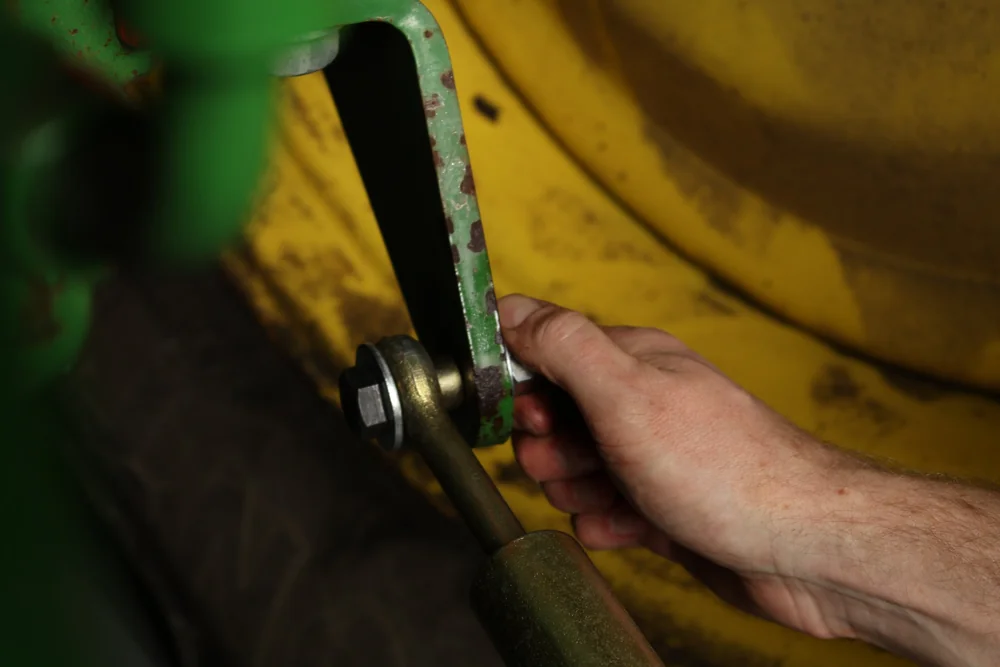
What is a three-point hitch?
The three-point hitch, also called the three-point linkage or 3-point linkage, is where the implement attaches to the tractor. It has three attachment points between the tractor and the implement:
- Two lower link arms. They are also called lift arms and carry the implement. At the end there is a lower link ball or a hook.
- One top link. It is also called the upper link and sets the forward or backward tilt of the implement.
- Stabiliser bars on the sides. They keep the lower link arms in place sideways.
The parts are held together by implement pins, linch pins and, when needed, bushings. You can also connect hitch equipment to the three-point hitch, such as a drawbar or an A-frame with a tow ball, and an implement carrier for quick implement changes.
Categories and sizes
The category decides which sizes apply to the pins in the three-point hitch. Always measure the existing pin with a vernier caliper, as parts may have been replaced before.
| Category | Top link pin | Lower link pin |
|---|---|---|
| Category 1 | 19 mm | 22 mm |
| Category 2 | 25.4 mm | 28.5 mm |
| Category 3 | 32 mm | approx. 36 mm |
The tractor and the implement can have different categories. Then you use bushings that reduce the hole diameter, for example from category 2 to category 1.
Why buy from Olsson Parts
- Wide range. We have parts for the three-point hitch, from linch pins to hydraulic top links.
- Experienced, knowledgeable and helpful staff. We are happy to help you find the right category and size.
- Customer service in English. Contact us in your own language if you have questions about the parts or your order.
Select your tractor make and model to see the parts that fit. Not sure about the category? Call us on +46 304‑751070 and we will help you.
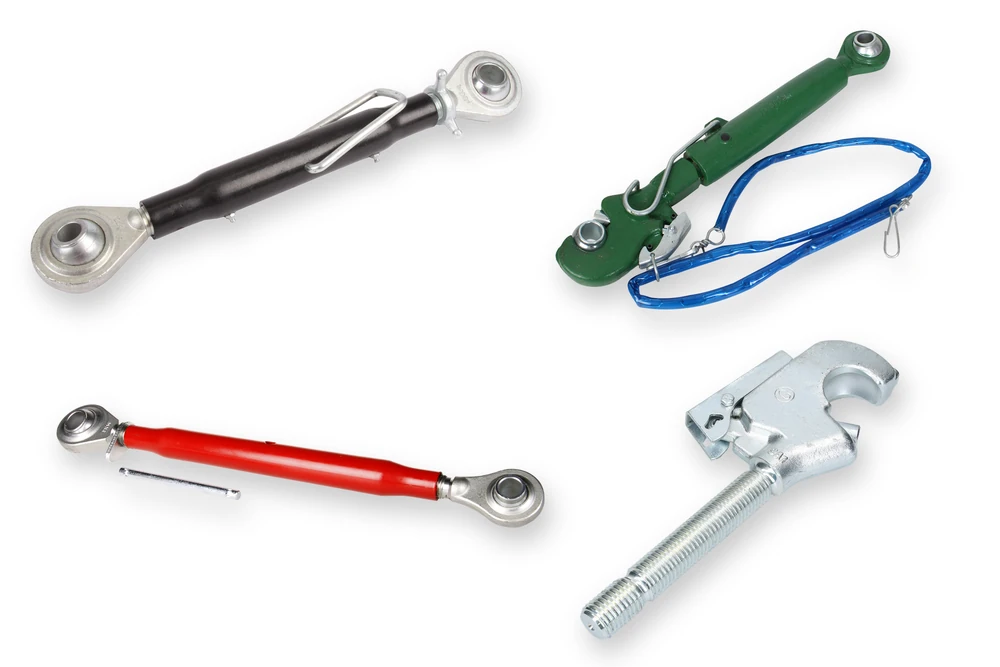
Mechanical top links
You adjust a mechanical top link by hand by screwing the ends of the link in or out. It is a simple and robust solution if you rarely change the angle of the implement.
We have mechanical top links in category 1, 2 and 3, and also for tractors and implements with different categories, such as category 2/3. The top links come with a ball end, ball joint or hook end, in lengths from 256 mm up to 965 mm. Here you will also find spare parts such as top link ends, top link balls, lock nuts and top link pins.
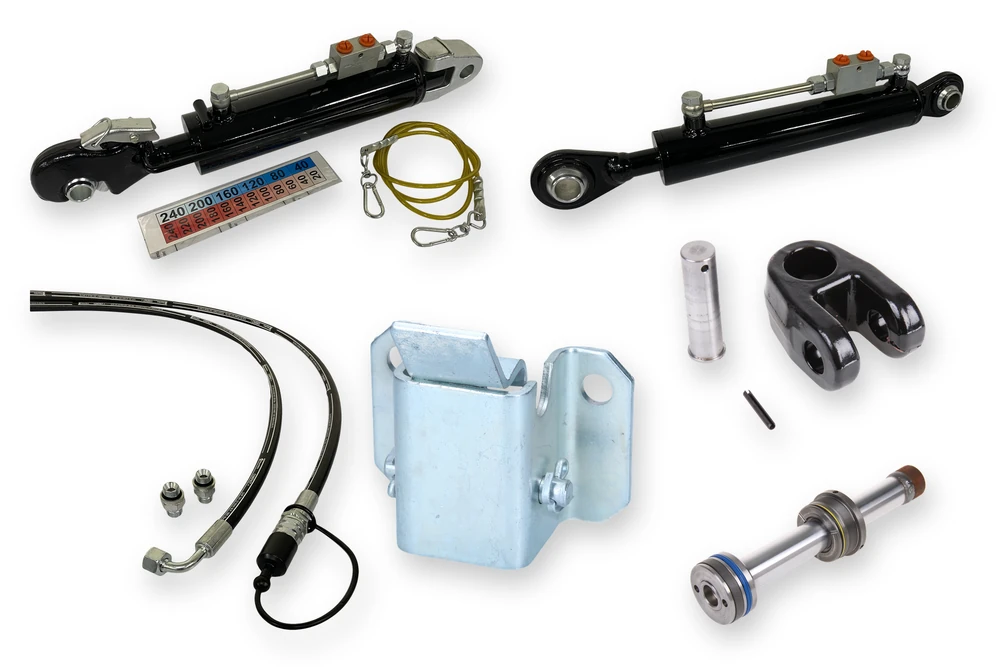
Hydraulic top links
With a hydraulic top link you adjust the angle of the implement directly from the driver's seat. It saves time when you change implements often or need to adjust the angle while working.
We have hydraulic top links from brands such as Byberg, for example series 4100 and the two-stage series 4300. The top links come with a ball end, clevis or hook end. Here you will also find spare parts such as piston rods, seal kits and hose kits.
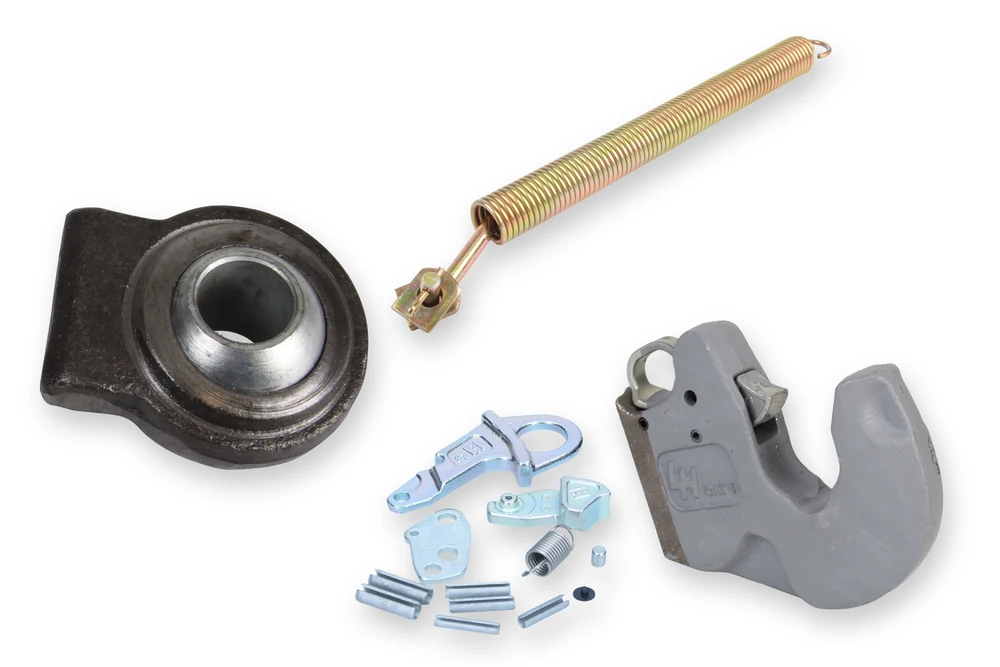
Lower link arms
The lower link arms are the two lower arms of the three-point hitch. They are also called lower links or lower lift arms and carry the implement.
Here you will find lower link balls, including combined balls with both 22 and 28.5 mm holes, and weldable repair ends in several sizes. We also have lower link hooks and repair kits from brands such as CBM, Walterscheid and LH-Lift, and an adjustable lower link spring for lateral adjustment.
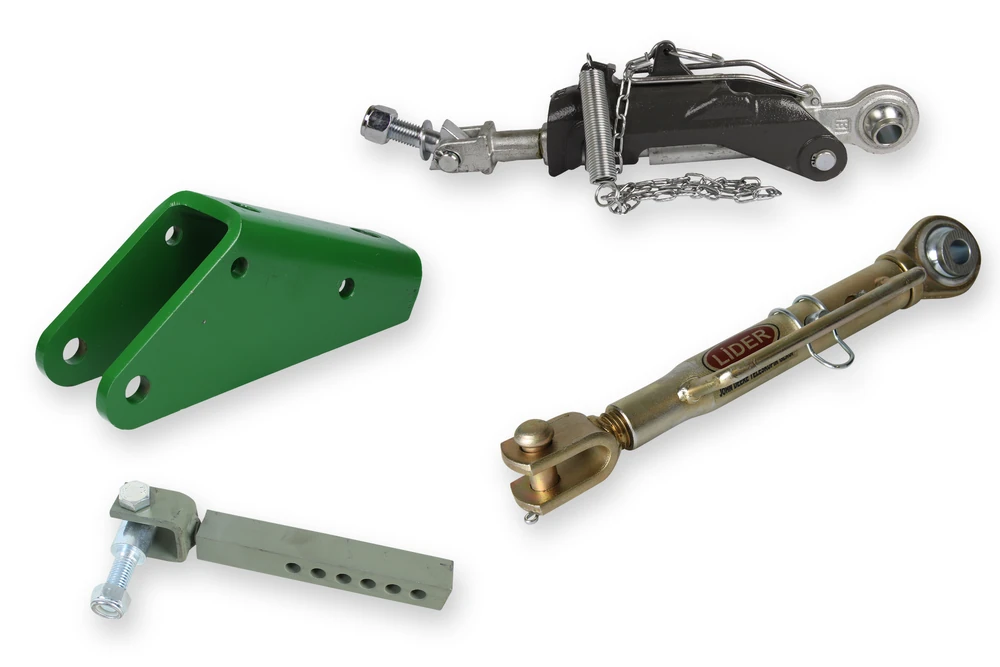
Stabiliser bars
The stabiliser bars sit on the sides and keep the lower link arms in place sideways, so that the implement runs steadily behind the tractor.
We have both adjustable stabiliser bars, which you set by hand, and automatic stabiliser bars. Here you will also find brackets, bolts and spare parts for the bars.
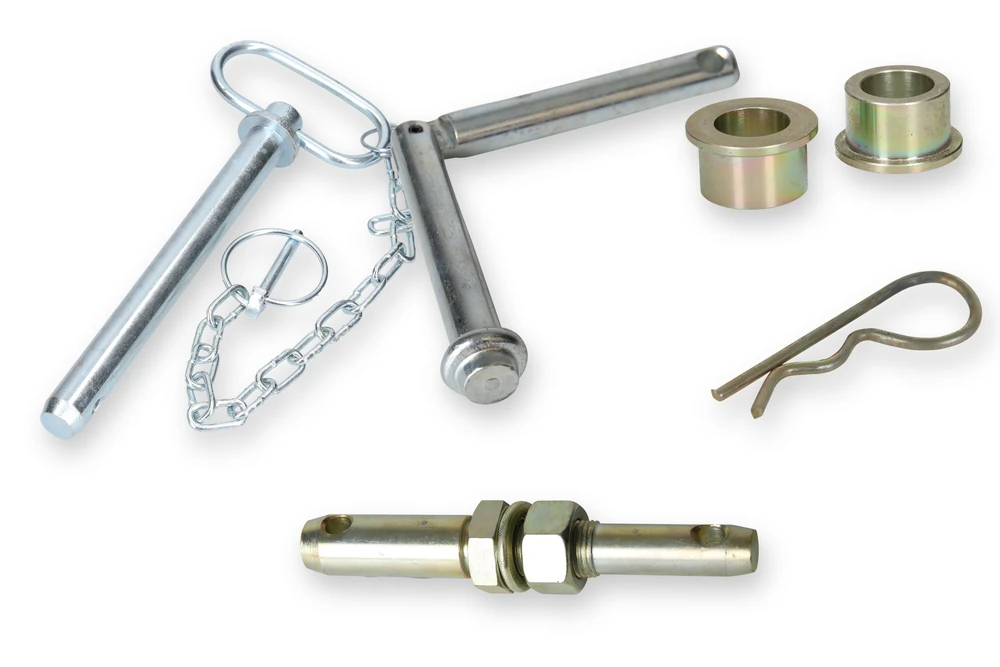
Bolts, bushings and pins
Pins and linch pins hold the implement and the three-point hitch together, and bushings let parts of different categories fit together.
Here you will find implement pins for the top link and lower link arms, with or without a handle, as well as pivot pins and drawbar pins. We have bushings for the top link and lower link arms, for example from category 2 to category 1. You will also find linch pins, R-clips, lock pins and cotter pins, both individually and in assortment boxes.
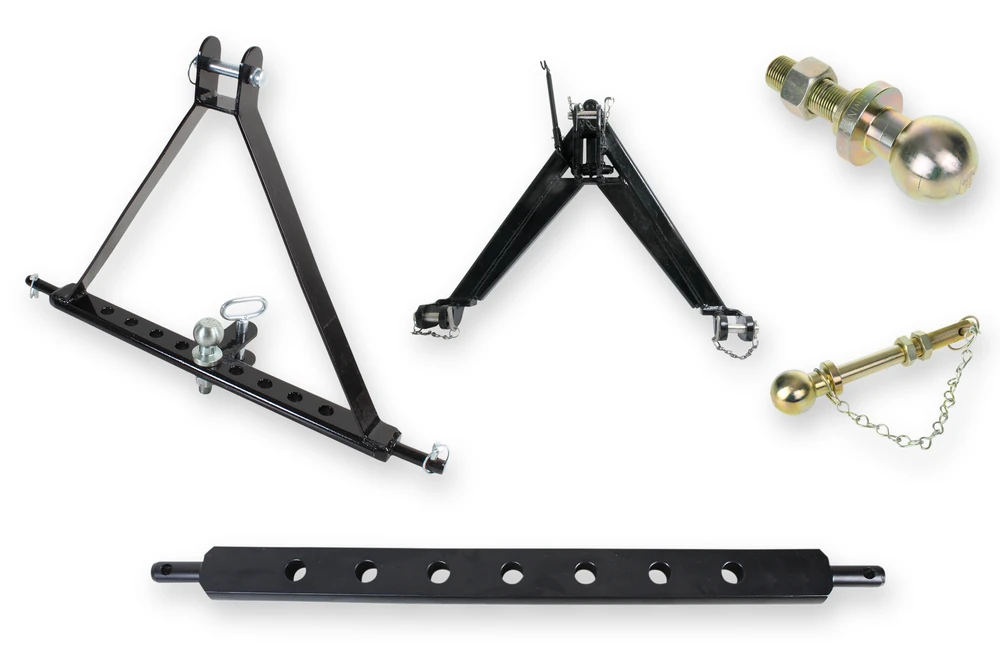
Hitch and implement carrier
With a hitch on the three-point hitch you can connect trailers and implements with a tow ball or drawbar. An implement carrier makes it quicker to switch between implements.
We have A-frames with a 50 mm tow ball in category 1 and 2, separate tow balls with different thread diameters and drawbars in category 1–3. Here you will also find implement carriers with an A-frame for vehicles in category 0–3 and A-frames for implements in category 1, 2 and 3.
Tinkering tips: how the three-point hitch parts work
Take a look at our tinkering tip where Stefan Ekblad, product specialist at Olsson Parts, goes through the three-point hitch parts and how the implement is attached to the tractor. See all our tinkering tips here.
In the video you will learn:
- which parts make up the three-point hitch
- how the three-point hitch parts are divided into categories
- what the category means for sizes and measurements
You will find the sizes for each category in the table above.
Go to the tinkering tipsCommon mistakes
These are the most common mistakes when replacing parts in the three-point hitch:
- Choosing by tractor model only. The implement's attachment points can differ. Always measure the pin diameter.
- Mixing up the sizes for the top link and the lower link arms. They have different pin diameters within the same category.
- Forgetting the bushings. Without the right bushing you get play and unnecessary wear.
- Reusing worn linch pins. A linch pin that does not lock properly can cause the implement to come loose.
FAQ / Frequently asked questions
What is a three-point hitch?
The three-point hitch, also called the three-point linkage, is where the implement attaches to the tractor. It has two lower link arms and one top link, which together carry and control the implement.
What are the parts of a three-point hitch?
The main parts are the two lower link arms (also called lower lift arms) with lower link balls or hooks, the top link and the stabiliser bars. They are held together by implement pins, linch pins and, when needed, bushings.
Are all three-point hitches the same?
No. Three-point hitches come in different categories with different pin sizes. The top link pin is 19 mm in category 1, 25.4 mm in category 2 and 32 mm in category 3. The lower link pin is 22 mm, 28.5 mm and approx. 36 mm.
What is a top link on a tractor?
The top link is the upper link of the three-point hitch. By making it longer or shorter, you set the forward or backward tilt of the implement.
What size top link do I need for my tractor?
Check the category of the pins at both ends and measure the length of your current top link. We have mechanical top links in category 1, 2 and 3, and for tractors and implements with different categories, such as 2/3, in lengths from 256 mm to 965 mm.
Should I choose a hydraulic or a mechanical top link?
A mechanical top link is adjusted by hand and is a simple, robust choice if you rarely change the implement angle. A hydraulic top link is adjusted from the driver's seat, which saves time if you change implements often. It is connected to the tractor's hydraulic outlets with a hose kit, sold separately.
How do I stop the three-point hitch from swaying?
The stabiliser bars keep the lower link arms in place sideways so the implement runs steadily behind the tractor. Check that they are adjusted correctly and that lower link balls and bushings are not worn. We have both adjustable and automatic stabiliser bars.
What is a top link holder for?
A top link holder lets you secure the top link when it is not in use. We have a spring-loaded mount that is used together with a bracket for top links with a hook.
Can I connect an implement with a different category?
Often yes, with bushings that adjust the hole diameter, for example from category 2 to category 1. Check the measurements carefully so the connection is stable and without play.
How do I find parts that fit my tractor?
Select your tractor make and model, for example John Deere, Massey Ferguson or New Holland, and the parts that fit are shown.

Get news, tips and promotions – straight to your inbox
Subscribe to our newsletter and receive the latest news, promotions, and maintenance tips directly to your inbox. It’s completely free, and you can easily unsubscribe at any time.
Do you have a question?
Here we have collected common questions and answers.
Can’t find the answer to your question? Don’t hesitate to contact us!
FAQ / Frequently Asked Questions