 Back to all buyer's guides
Machinery paint for tractors & construction equipment
The right paint and the right preparation protect your machine against rust and wear – and last for many years. Here we go through how to choose the type of paint, prepare the surface and paint correctly, whether you need a small touch-up or a full repaint.
Step 1 of 4
Which machinery paint suits your needs?
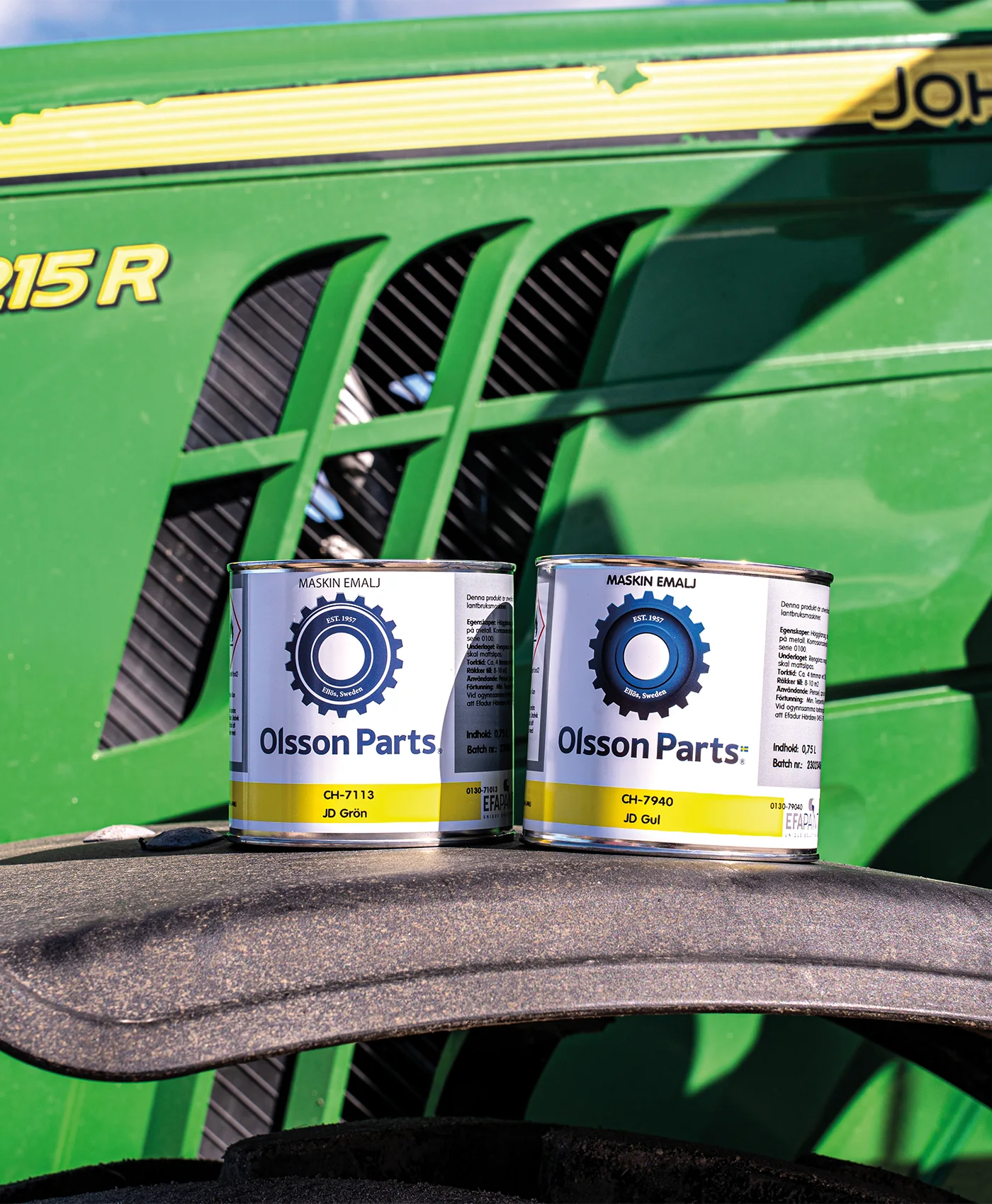
Tractor paint
Withstands moisture, soil, manure and changing temperatures. The right colour matters for a restoration.
Construction equipment
Extra resistant to gravel, stone, clay and mechanical wear. Requires careful groundwork.
Implements & details
Buckets, rims, implement brackets and steps. A touch-up is often enough.
Find the right machinery paint – browse by colour
Step 2 of 4
Is it time to repaint?
Look out for these signs that it’s time to act:
✔ Flaking or peeling
✔ Rust spots
✔ Scratches down to the metal
✔ Faded or dull paint
✔ Stone-chip damage
✔ Worn steps or rims
Tip: If the damage is small and localised, a touch-up will do. If the surface is faded, uneven or damaged over large areas – choose a full repaint for an even result.
Step 3 of 4
Do this before you open the paint can
Wash thoroughly
Remove mud, oil and dirt. Take extra care around hydraulics, hinges and rims.
Degrease the surface
Even a seemingly clean surface can have grease or wax residue. Degreasing reduces the risk of the paint letting go.
Remove rust and loose paint
Use a wire brush, abrasive cloth or sander. If you paint over rust, the problem soon comes back.
Sand the surface matt
A matt surface gives better adhesion. Wipe off all sanding dust carefully before you continue.
Apply primer
On bare metal, primer is always needed for good adhesion and rust protection.
Step 4 of 4
Brush, roller or spray?
Brush
Touch-ups, implements, chassis parts and hard-to-reach areas.
Roller
Larger flat surfaces. Good for beds, buckets and machine parts.
Spray
The smoothest finish. Suits bonnets, fenders and whole machines. Requires more preparation.
What you’ll need
Paint & treatment
Machinery paint, primer, hardener if needed, thinner and degreaser.
Protective equipment
Gloves, safety goggles, respiratory protection and good ventilation.
Tools
Sandpaper, sander, wire brush, masking tape and protective sheeting.
Don’t forget: Always apply several thin coats and give the paint time to cure properly – not just dry – before the machine is put back into use.
FAQ / Frequently asked questions
Can I paint directly onto rust?
No. Paint over rust lets go quickly, and the rust keeps working underneath. Remove all rust and loose paint with a wire brush, abrasive cloth or sander, sand down to sound metal and apply primer before you paint. It’s the groundwork that determines how long the result lasts.
Do I need primer?
On bare metal you always need primer – it provides adhesion and rust protection. For a touch-up on a surface with intact existing paint, it’s usually enough to sand it matt and paint directly, provided you haven’t gone all the way down to the metal.
When is a touch-up enough and when should I do a full repaint?
If the damage is small and localised – the odd scratch, stone chip or minor rust spot – a touch-up is enough. If the paint is faded, dull or damaged over large areas, touching up gives an uneven result, and then a full repaint is the right way to a smooth finish.
Brush, roller or spray – which should I choose?
A brush suits touch-ups, implements, chassis parts and hard-to-reach areas. A roller is good for larger flat surfaces such as beds and buckets. A spray gives the smoothest finish on bonnets, fenders and whole machines, but requires more preparation and masking.
How many coats of paint do I need?
Apply several thin coats rather than one thick one – thin coats dry more evenly and don’t run. Two to three coats is common, but always follow the instructions on your specific paint for the number of coats and the drying time between them.
How long does the paint need to cure before the machine is used?
Distinguish between drying and curing. The paint can feel dry to the touch after a few hours but needs considerably longer to cure properly and reach full durability. Give it time according to the manufacturer’s instructions before the machine is put back into use, otherwise you risk marks and poorer durability.
Do I need the correct original colour?
For a restoration, the right colour matters for appearance and resale value, especially on tractors where the brand colour is distinctive. For implements and details, the exact colour is less critical – there, protection and durability matter more than the shade.

Get news, tips and promotions – straight to your inbox
Subscribe to our newsletter and receive the latest news, promotions, and maintenance tips directly to your inbox. It’s completely free, and you can easily unsubscribe at any time.
You might also like

Do you have a question?
Here we have collected common questions and answers.
Can’t find the answer to your question? Don’t hesitate to contact us!
FAQ / Frequently Asked Questions