 Back to all buyer's guides
Boat haul-out – how to prepare your boat engine for winter storage
When the boating season draws to a close, it’s time to haul out the boat and prepare your diesel inboard for its winter rest. A thorough winterization is the cheapest insurance you can give the engine: it protects against corrosion, frost damage and breakdowns – and makes launching in spring easy and trouble-free.
This guide walks you through the entire job step by step. You’ll find the spare parts, filters, oils and accessories you need with us at Olsson Parts.
Why is it important to prepare the engine?
Over a long winter the engine stands still for months. Moisture, salt and old fluids then work against the metal from the inside out. With the right preparation:
Extended service life
Clean oil and fresh coolant protect cylinders, bearings and cooling channels against corrosion during the standstill.
Fewer breakdowns
New filters and healthy belts reduce the risk of unexpected failures next season.
Easy launching
When everything is already done in autumn, the boat is ready straight away when spring arrives.
Tip! Find exactly the right part with a reference number
Filters, impeller, oil filter or fuel filter – search by the part’s reference number and you’ll get an exact match, regardless of engine brand. The number is usually right on the part, in the service manual or on the original packaging. Copy it exactly and search with us.
See the buyer's guide – how to search with a reference number
How to do it – step by step
1
Cleaning and preparation
Run the engine warm before you start. Warm oil flows more easily and carries out more contaminants when it’s drained – a cold engine gives a poorer result. At the same time, get everything you need ready: the right amount of oil, new filters, glycol, an impeller and a rag close at hand.
Then clean the engine thoroughly. Remove dirt, salt and other contaminants that have built up during the season. A clean engine also makes it easier to spot oil and water leaks later in the job.
2
The lubrication system
The lubrication system is the heart of the engine. Old oil contains acids and particles that corrode during the standstill – so always change it before winter, and take the chance to check the valve clearance while you’re already inside the engine.
Change the engine oil and oil filter
On boat engines the oil plug is often hard to reach. The solution is to suck out the oil through the dipstick tube with an oil extractor. Some engines have a dedicated connection for this purpose. Extract all the oil, then change the oil filter – it’s often easily accessible.
How to do it
- Run the engine warm.
- Suck out the oil through the dipstick tube, down to the oil pan.
- Change the oil filter and tighten it by hand.
- Fill with new oil of the right quality and amount.
- Start the engine, check that it’s sealed around the filter and that the oil pressure comes up.
- Switch off, wait a moment and check the level with the dipstick.
Oil quantity: The volume varies with the engine type and mounting angle. A larger Volvo Penta diesel often holds around 9.5–11 litres, while smaller engines need considerably less. Always check the correct volume for your specific engine.
Check the valve clearance
Volvo recommends checking the valve clearance every 200 operating hours, so it’s not something you need to do every year – but it’s easy to forget. Note when you last checked it so it isn’t overlooked.
3
The fuel system
Clean fuel is crucial for operational reliability. Change the filter, check the water separator and protect the fuel itself before winter.
Change the fuel filter and check the water separator
Change the fine filter (the fuel filter) on the engine and check the pre-filter, that is, the water separator that often sits somewhere else in the boat.
- Check the water separator at least once a year and make sure a lot of water hasn’t collected in it.
- Change the fine filter on the engine.
- Bleed the fuel system after the change – often via a bleed screw – so the engine starts without problems.
Treat the fuel with a stabilizer
Drain or treat the fuel system with a stabilizer to prevent the fuel from deteriorating during winter. It keeps the system clean and counteracts clogging of fuel lines and fuel filters.
4
The cooling and seawater system
This is the most important step before winter – a frozen or neglected cooling system can cause expensive damage. Take your time with the glycol, impeller and seawater filter.
Winterize the cooling system with glycol
A frozen cooling system can crack both the block and the heat exchanger. So run a glycol mixture through the cooling system and make sure the mixture has passed through the entire system. At the same time, check the level in the expansion tank and the coolant’s frost protection. The coolant also acts as corrosion protection and should be changed roughly every other year – poor coolant can cause serious damage inside the engine.
Check and replace the impeller
The seawater pump is an impeller pump that pumps in seawater to cool the engine. The impeller is made of rubber and should be checked every year.
How to do it
- Unscrew the cover on the seawater pump.
- Take out the impeller and check that it’s intact.
- Look for cracks – old rubber can crack and loose pieces can get stuck in the system.
- Check the O-ring. If you replace the impeller, you also replace the O-ring.
- Put the cover back on and make sure it seals so that seawater doesn’t leak in.
Clean the seawater filter
Check the seawater filter so that it’s free from snails, shells and seaweed. This is a filter you may need to check even mid-season if you’ve run through debris in the water. Unscrew the cover, take out the strainer, check that it’s intact and clean, clean it if needed and put it back.
5
Air filter, belts and compressor
Look over the engine’s external parts while you’ve got the belt guard off and can reach them.
Check the air filter
Check the air filter and replace it if needed – preferably every year. After a season, quite a lot of dust can have collected. If the filter is stuck, it may need a gentle tap to come loose. If it’s clean, it can stay on for another season.
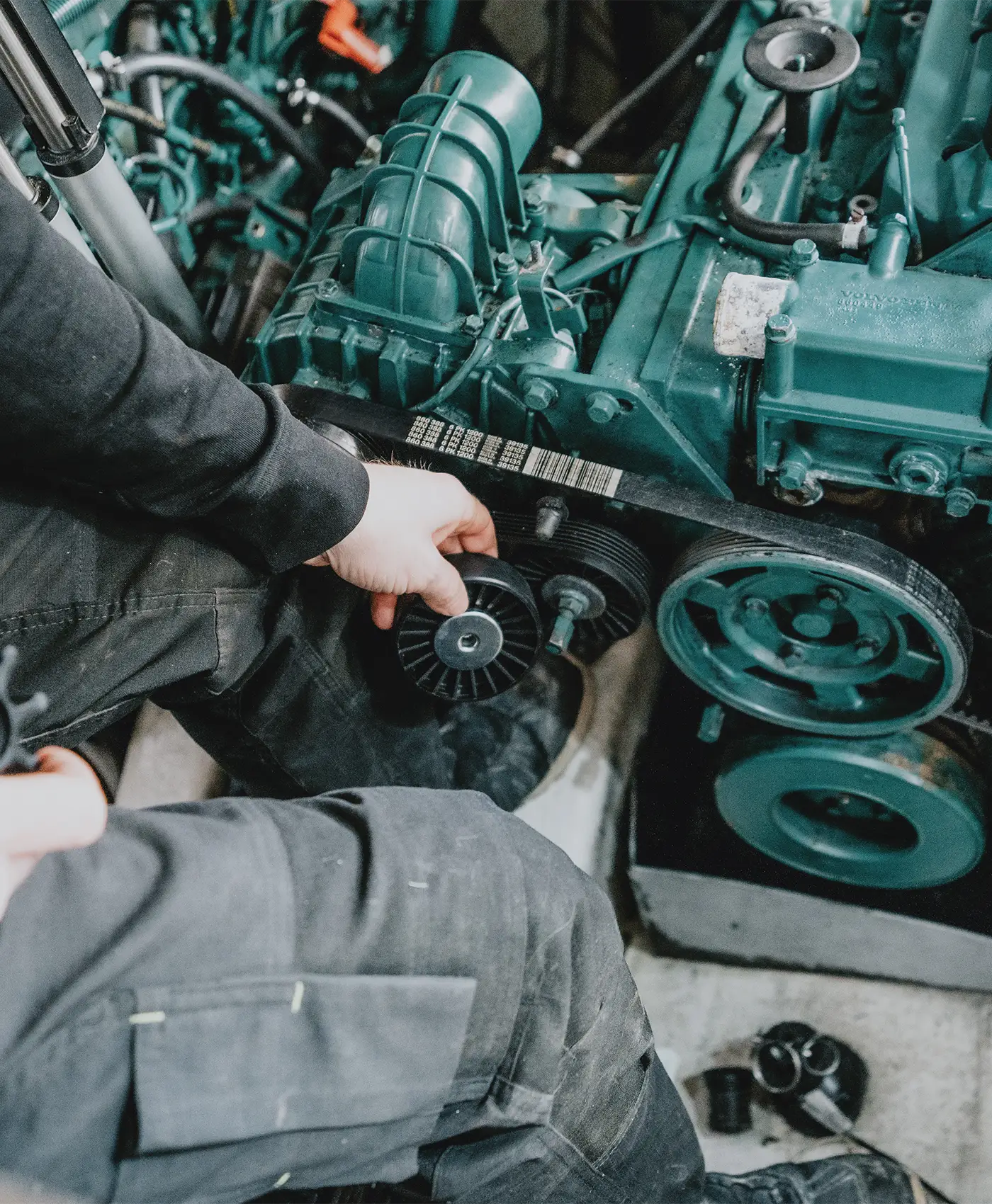
Inspect the belts and tension pulleys
Remove the belt guard and inspect all the belts. An engine can have several: a multi-rib belt for the water pump, a classic V-belt for the alternator and belt drive for a possible compressor.
- Loosen the tension pulleys and spin them freely to check that the bearings are in good condition – otherwise replace the tension pulleys.
- Twist the belts and check that they’re intact, without dry cracks or wear.
- A belt that snaps during operation can knock out both cooling and charging – replace it in time.
Check the compressor (if your engine has one)
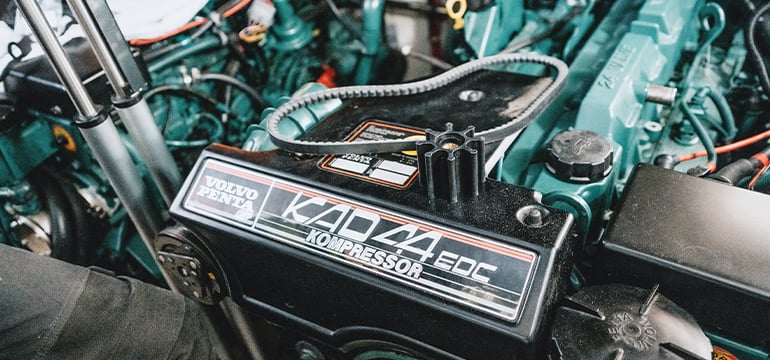
If your engine has a compressor that helps out at low revs, check the oil level with the small dipstick at least once a year – it’s often about a good decilitre. The oil change itself needs to be done far less often (around every 500 operating hours), but always check the level so that it isn’t leaking.
6
Look for oil and water leaks
Look carefully for, and fix, any oil and water leaks to secure next year’s operation. Many engines have small telltale holes that reveal leaks:
- The seawater pump usually has a telltale hole where water drips out if the shaft seal is leaking.
- The intercooler has a small hole (often around 4 mm) at the bottom. If it leaks there, the water drips down onto the starter motor – bend down and check while you’re changing the filter anyway.
7
Protection and winter storage
Now all that remains is to protect the engine and get it ready to stand still over the winter.
Rust-protect the metal parts
Spray a protective agent, for example WD-40 or an equivalent protective oil, onto the engine’s metal parts to protect against rust during the damp winter months.
Seal the intake and openings
To stop moisture and pests from getting into the engine, you can cover the intake and other openings. Just remember to remove the covering before launching in spring.
Battery care
Disconnect the battery and charge it properly. Store it in a dry, frost-free place. A maintenance charger that keeps the battery at a steady voltage is a good investment – a discharged battery that freezes is easily damaged.
Quick checklist for winter storage
- Clean the engine and engine compartment
- Change engine oil and oil filter (warm engine)
- Check valve clearance (every 200 hours)
- Change the fuel filter and check the water separator
- Winterize the cooling system with glycol
- Check and replace the impeller + O-ring
- Clean the seawater filter
- Check/replace the air filter
- Inspect belts and tension pulleys
- Check the compressor oil level (if applicable)
- Look for oil and water leaks
- Treat the fuel system with a stabilizer
- Rust-protect metal parts
- Seal the intake and openings
- Charge and store the battery frost-free
Everything you need for winter storage
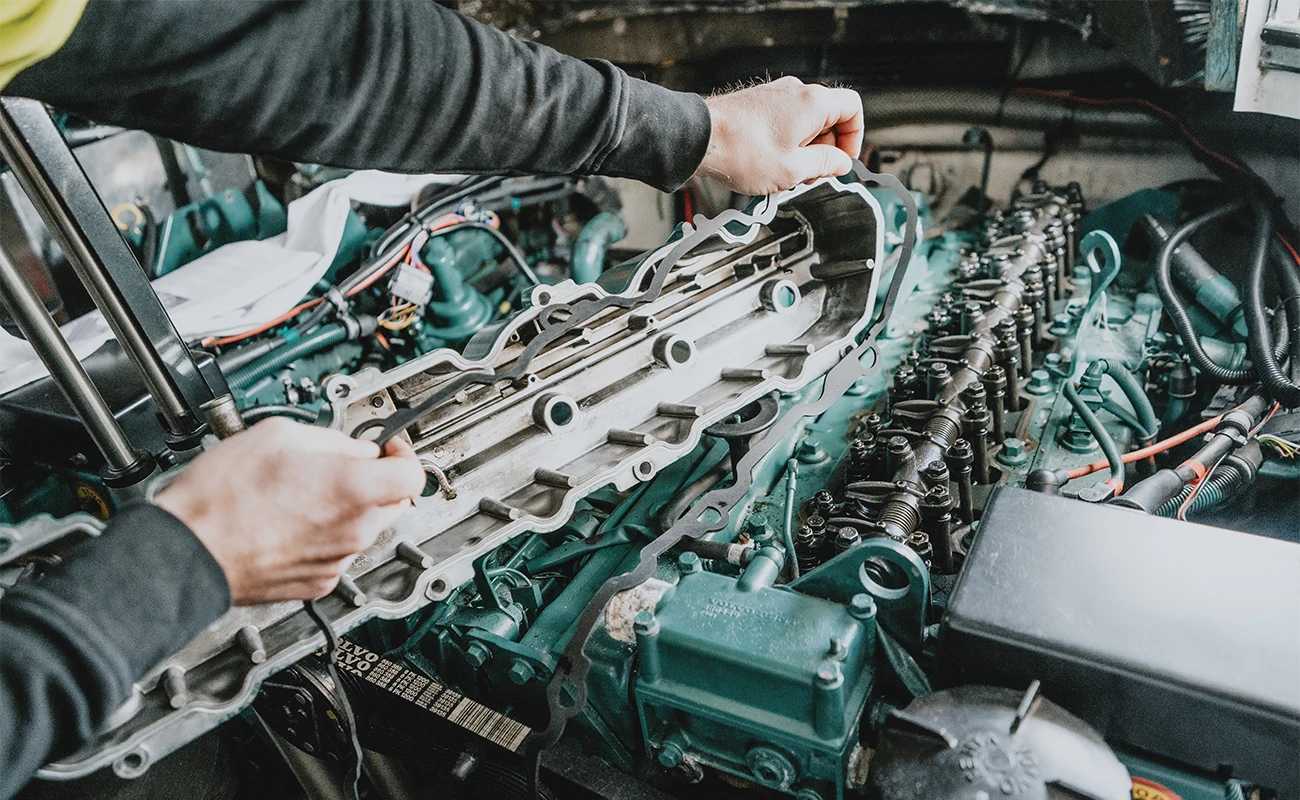
At Olsson Parts you’ll find filters, oils, impellers, belts, glycol, battery chargers and protective products that fit both Volvo Penta and Yanmar. With our part search you quickly find the right spare part for your specific engine model, and you shop safely with secure payment and personal service.
Choose model
Tinkering tips with Olsson Parts – winterizing your boat engine
In this video our range developer Fredrik Vikström and our product specialist Tommy Abrahamsson explain the most important steps to keep in mind to get the engine properly winterized. By following their advice you reduce the risk of problems when the boating season starts up again, and at the same time help extend the life of your engine.
FAQ / Frequently asked questions
When should you haul out the boat for winter storage?
Haul out the boat when the season is drawing to a close and before the first frosty nights. Do the winterization while it’s still a few degrees above freezing, so the cooling system doesn’t freeze before you’ve added glycol.
Should the engine be warm when changing the oil?
Yes. Run the engine warm before the oil change. Warm oil flows more easily and carries out more contaminants than cold oil, giving a cleaner change.
How do you drain the oil on a boat engine?
On most boat engines the oil plug is hard to reach. Instead you suck out the oil through the dipstick tube with an oil extractor, down to the oil pan.
How much oil does a boat engine take?
It depends on the engine type and mounting angle. A larger Volvo Penta diesel often holds around 9.5–11 litres, while smaller engines need less. Always check the correct volume for your specific engine.
Do I need to replace the impeller every year?
Check the impeller every year and replace it as soon as it shows cracks or wear. The rubber ages and loose pieces can get stuck in the cooling system. If you replace the impeller, you also replace the O-ring.
Which glycol should I use and how often should I change the coolant?
Use a glycol mixture suitable for your engine and run it through the entire cooling system so you get full frost protection. The coolant also acts as corrosion protection and should be changed roughly every other year.
How often should the valve clearance be checked?
Volvo recommends a check every 200 operating hours. How often that is in practice depends on how much you run the engine – note the latest check so it isn’t forgotten.
What is the difference between a pre-filter and a fine filter?
The pre-filter (the water separator) often sits further away in the boat and separates out water and coarse particles. The fine filter is the fuel filter on the engine itself. Check both – and bleed the system after a filter change.
How do I store the boat battery over the winter?
Disconnect the battery, charge it fully and store it dry and frost-free. A maintenance charger that keeps a steady voltage protects the battery during the winter.
You might also like


Get news, tips and promotions – straight to your inbox
Subscribe to our newsletter and receive the latest news, promotions, and maintenance tips directly to your inbox. It’s completely free, and you can easily unsubscribe at any time.
Do you have a question?
Here we have collected common questions and answers.
Can’t find the answer to your question? Don’t hesitate to contact us!
FAQ / Frequently Asked Questions