 Back to all buyer's guides
Choose the right top link for your tractor
The top link is the upper link of the tractor's three-point hitch. It adjusts the angle of the implement and is crucial for safe and precise work. Here we explain how to choose the right one – whether you need a mechanical or a hydraulic top link.
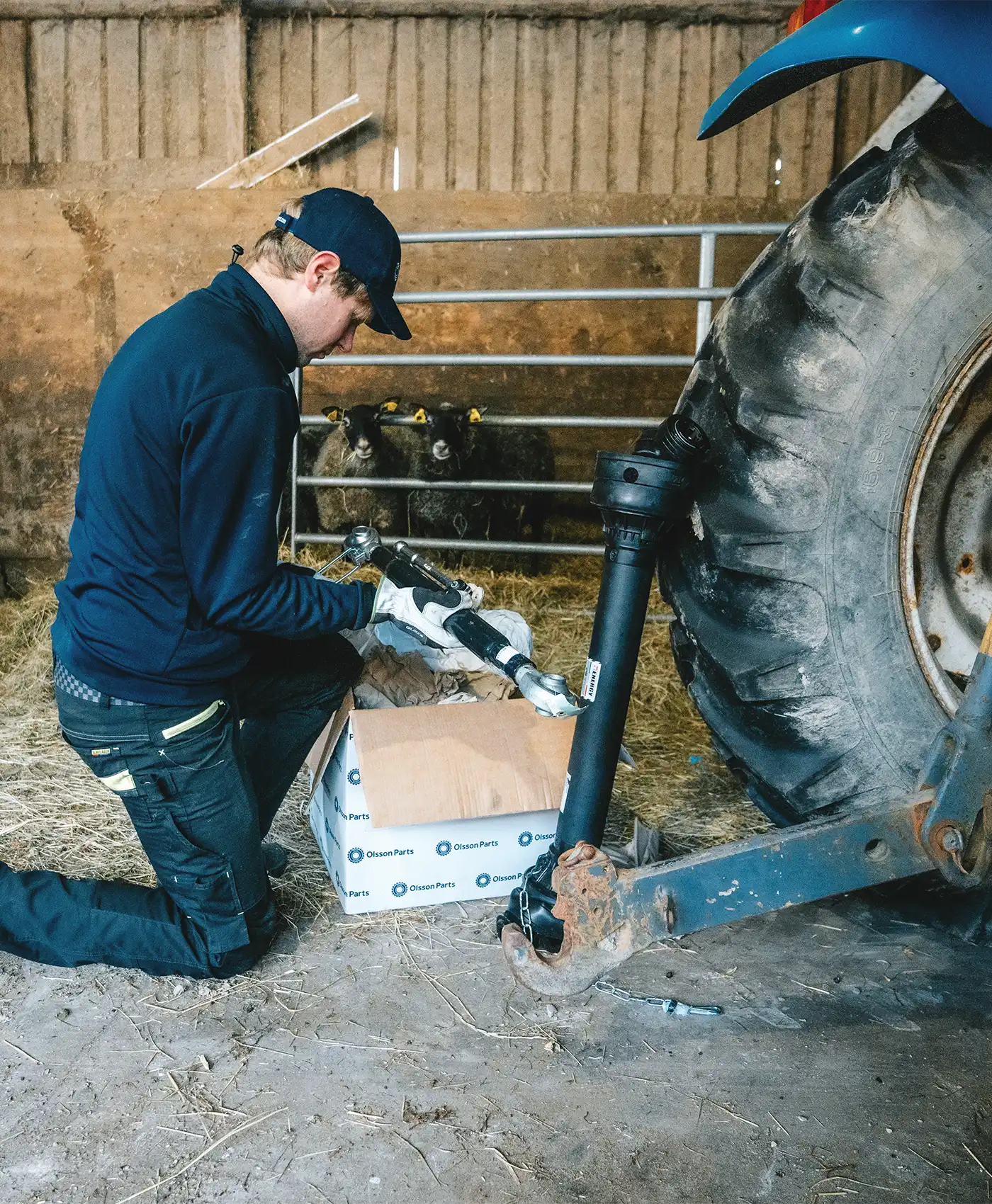
Quick answer: which top link should I choose?
Choose a top link based on the tractor's three-point linkage, the implement's attachment and the right category. Check the pin diameter, the ball dimensions and that the top link has the right length and adjustment range. A hydraulic top link also requires a double-acting hydraulic outlet on the tractor. If needed, add the right implement pin, linch pin and bushings for secure mounting without play.
A top link is used to adjust the angle of the implement behind the tractor. The right top link makes the implement more stable, easier to set up and safer to use.
What is a top link?
A top link is the upper link in the tractor's three-point hitch. It sits between the tractor and the implement and is used to adjust the tilt of the implement forwards or backwards.
A correctly chosen top link helps you to:
- achieve the right working angle on the implement
- reduce play and unnecessary wear
- mount the implement securely
- adapt the tractor to different implements
- work more efficiently in the field, on the road or in the farmyard
Mechanical or hydraulic top link?
A mechanical top link is adjusted by screwing it longer or shorter by hand. It is simple, robust and affordable, and is a good choice if you rarely change implements or settings.
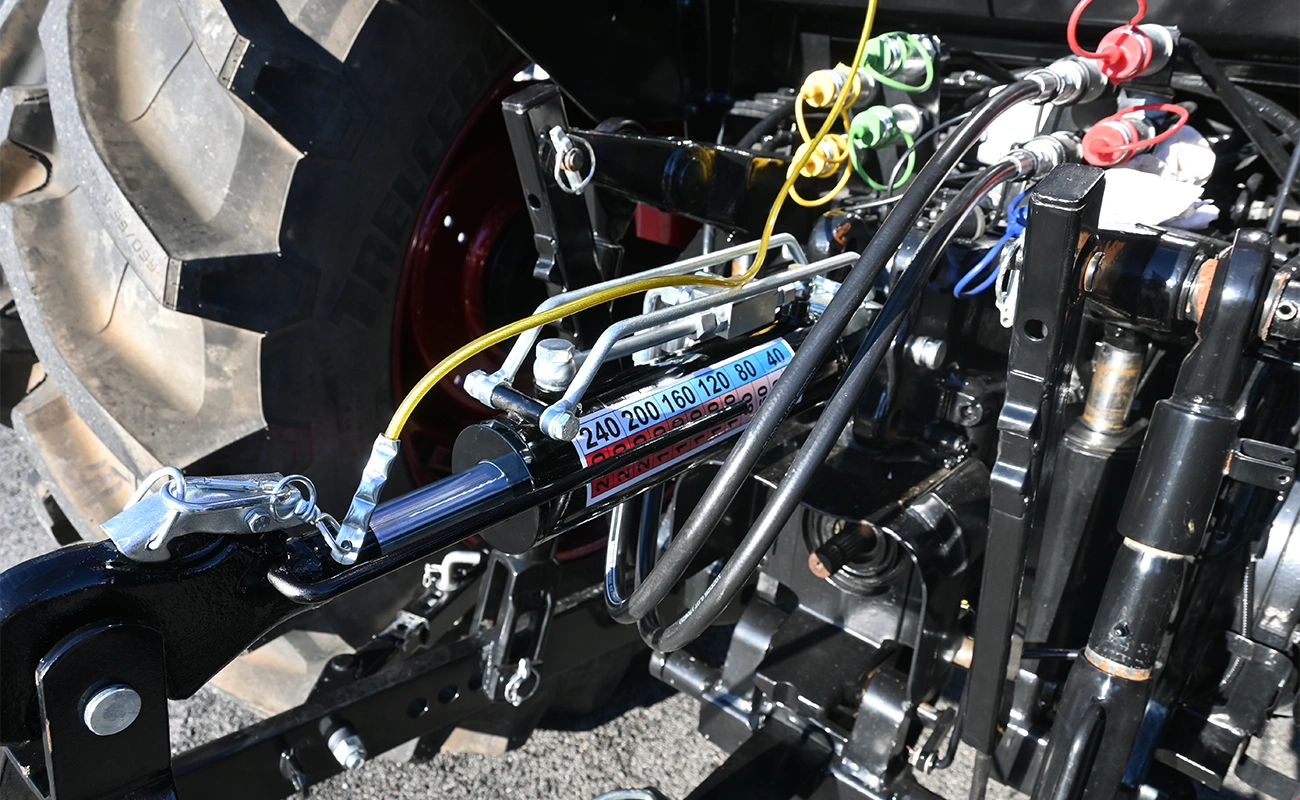
A hydraulic top link is a double-acting hydraulic cylinder that you control with the tractor's hydraulics. You adjust the angle of the implement directly from the driver's seat, even while working, and do not have to climb out of the tractor for every adjustment. It suits you if you change implements often or need to fine-tune the working angle while driving.
How to choose the right top link – step by step
1
Find your category
The category determines which dimensions apply. Measure the pin diameter of your existing top link.
| Category | Pin diameter, top link | Pin diameter, lift arm |
|---|---|---|
| Cat. 1 | approx. 19 mm | approx. 22 mm |
| Cat. 2 | approx. 25 mm | approx. 28 mm |
| Cat. 3 | approx. 32 mm | approx. 36 mm |
| Cat. 4 | approx. 45 mm | approx. 51 mm |
Tip: Always measure the existing pin with a caliper. Going by tractor model alone can give the wrong result, especially if parts have been replaced previously.
2
Check the ball's outer diameter
The ball diameter determines whether the implement fits in the lift arms. Measure if you are unsure.
| Category | Ball outer diameter (lift arm) |
|---|---|
| Cat. 1 | approx. 44.5 mm |
| Cat. 2 | approx. 56 mm |
| Cat. 3 | approx. 63 mm |
| Cat. 4 | approx. 85 mm |
3
Choose the end fittings
The ends of the top link must fit both the tractor's and the implement's upper attachment point. The most common designs are:
- Ball joint at both ends – attached with a pin and linch pin on both the tractor and the implement. Suits most three-point implements.
- Clevis – a fork-shaped end that is attached around the tractor's mounting point with a pin.
- Catch hook – a hook-shaped end towards the implement that lets you hook on the implement from the driver's seat.
A catch hook is particularly practical on hydraulic top links, as you can adjust the length and hitch the implement without leaving the cab.
4
Choose the right length
The top link must be adjustable to give the correct working angle. How you measure depends on whether the top link is mechanical or hydraulic.
Mechanical top link:
- Measure the old top link fully screwed in and fully screwed out
- Check the distance between the tractor's and the implement's upper attachment points
- Make sure the threads have sufficient engagement even when fully screwed out
Hydraulic top link:
- Measure your current top link between the centres of the mounting holes when the implement is in its normal working position
- Compare with the installation length of the hydraulic top link – that is, its length when fully retracted
- Check that the stroke is long enough to reach the length you need when fully extended
Remember: A top link that is too short gives the wrong angle. A top link that is too long gives poor control.
5
Check the tractor's hydraulic outlets – applies to hydraulic top links
A hydraulic top link is controlled with two hoses – one to extend and one to retract – and therefore requires a double-acting hydraulic outlet on the tractor.
- Check that the tractor has a free double-acting outlet
- Check which type of quick couplers the tractor has
- Check whether hoses are included or need to be bought separately, and that they are long enough to reach from the outlet to the top link
A top link with a pilot-operated check valve holds the set length even under load, so that the implement does not change angle during work.
4
Do you need bushings?
If the implement and the tractor do not have exactly the same dimension, a bushing kit is required.
- The implement has a larger hole than the tractor's pin
- You are connecting implements from different categories
- You want to reduce play and wear
7
Check the bolt and linch pin
To lock the top link and implement in place, the right bolt and pin are needed.
- The bolt must have the right diameter and length
- The pin must lock securely – replace worn pins
- Old and bent pins should always be replaced
Common mistakes to avoid
Choosing based on tractor model alone
The tractor model gives you guidance, but the implement's attachment can differ. Always measure the pin diameter and the length.
Missing the difference between top link and lower link
Top links and lower links have different dimensions. A dimension that applies to the lower link does not automatically apply to the top link.
Not checking the adjustment length
The top link does not just have to fit at the ends. It must also be adjustable to the correct working angle. On a hydraulic top link, the installation length and stroke determine how much you can adjust.
Forgetting the hoses
Hydraulic top links are often supplied without hoses. Check whether you need to buy a hose kit, and that the couplers fit the tractor's outlets.
Reusing worn linch pins
Old linch pins can be bent, worn or too loose. It is better to replace them with new locking parts when needed.
Checklist before buying

Category checked
Determines pin and ball dimensions
Pin diameter measured
Ensures the right fit
End fittings checked
Ball joint, clevis or catch hook
Min and max length checked
Provides sufficient adjustment range
Implement attachment checked
Must fit the ends of the top link
Hydraulic outlets and hoses checked
Applies to hydraulic top links
Need for bushings checked
Reduces play with different dimensions
Pin and linch pin checked
Required for secure locking
FAQ / Frequently asked questions about tractor top links
How do I know which category my top link is?
Measure the pin diameter. A category 1 top link normally has a pin diameter of approximately 19 mm, category 2 approximately 25 mm, category 3 approximately 32 mm and category 4 approximately 45 mm.
Can I use a top link of the wrong category?
It is not recommended without the right adaptation. The wrong category can cause play, poor fit or unsafe mounting. In some cases bushings can be used, but the dimensions must be checked carefully.
What does a bushing kit do?
A bushing kit reduces the hole diameter so that the pin and the attachment fit together better. This reduces play and makes the connection more stable.
When should I replace my top link?
Replace the top link if it is bent, has damaged threads, has a lot of play, is difficult to adjust or no longer holds the implement in the correct position. On a hydraulic top link, oil leaks at the cylinder or couplings are also a sign that it needs attention.
Do I need to replace the implement pin and linch pin at the same time?
It is often wise to check them at the same time. If the pin is worn or the linch pin does not lock properly, they should be replaced to ensure secure mounting.
How do I find a top link for my tractor?
First choose your tractor make and then your model. You will then see the spare parts that fit your specific tractor.
What is the difference between a mechanical and a hydraulic top link?
A mechanical top link is adjusted by hand by screwing it longer or shorter. A hydraulic top link is adjusted using the tractor's hydraulics, so you can change the angle of the implement directly from the driver's seat.
What do I need to use a hydraulic top link?
The tractor needs a double-acting hydraulic outlet. You also need hoses with quick couplers that fit the tractor's outlets, if they are not included with the top link.
How do I measure for a hydraulic top link?
Measure your current top link between the centres of the mounting holes in its normal working position. Then choose a hydraulic top link whose installation length and stroke cover that length, with a margin in both directions.
You might also like
Spare parts for your machine

Get news, tips and promotions – straight to your inbox
Subscribe to our newsletter and receive the latest news, promotions, and maintenance tips directly to your inbox. It’s completely free, and you can easily unsubscribe at any time.
Do you have a question?
Here we have collected common questions and answers.
Can’t find the answer to your question? Don’t hesitate to contact us!
FAQ / Frequently Asked Questions