 Back to all buyer's guides
Choose the right vehicle lighting
for your tractor, machine and trailer
When darkness falls, the right lighting is crucial for both visibility and safety. This guide takes you through and helps you choose lighting for your tractor, construction machine and trailer – from work lights and head lights to driving lights, warning lights and bulbs – so that you find the right fit for your specific needs.
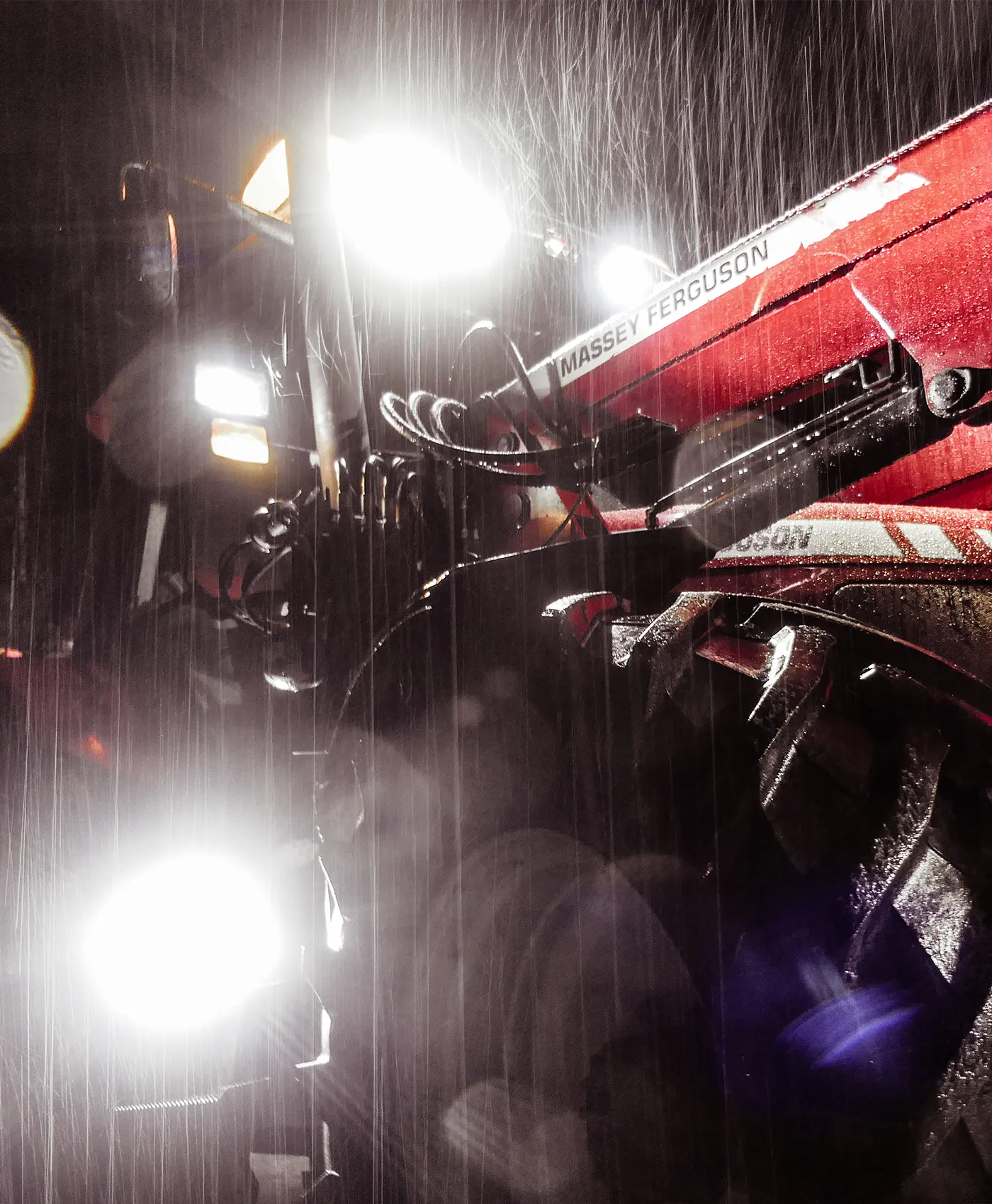
What should you consider when buying lighting?
Short answer: start from what the light is meant to do – work, driving on the road or warning – and then choose light pattern, strength (lumens), approval and the right connection based on that.
Start from what the light is meant to do, not from a single lamp model. A work light that illuminates loading has completely different requirements than a head light that has to handle driving on the road or a warning light that has to alert the surroundings. Once you know the task, the rest becomes easier: light pattern, strength, approval and connection fall into place.
Lighting is also a safety issue. Many misjudgements and accidents in agriculture and construction happen at dawn, dusk or inside dark machine sheds, where visibility is limited. With sufficiently strong and correctly placed light, you see better, your eyes get less tired and you can work more precisely. That makes the work both safer and more efficient.
Four questions to ask before you choose
- What is the light going to be used for? Work around the machine, driving forward, visibility to the rear or warning?
- Wide or narrow light pattern? Should the light spread around the machine or reach far ahead?
- 12V or 24V? Check the vehicle's system. Many of our lamps handle both.
- Does it need to be road-approved? Then you need to check the E-marking and the right ECE approval.
Compare lighting before you buy
Do you want to compare how different lamps actually shine before you decide? In our light studio at lights.olssonparts.com you can see brightness, range and spread for a large selection of our range, tested under real conditions.
To the light studio
What type of lighting do you need?
The range covers the vehicle's entire lighting setup. Here are the most common categories, sorted by what they are used for.
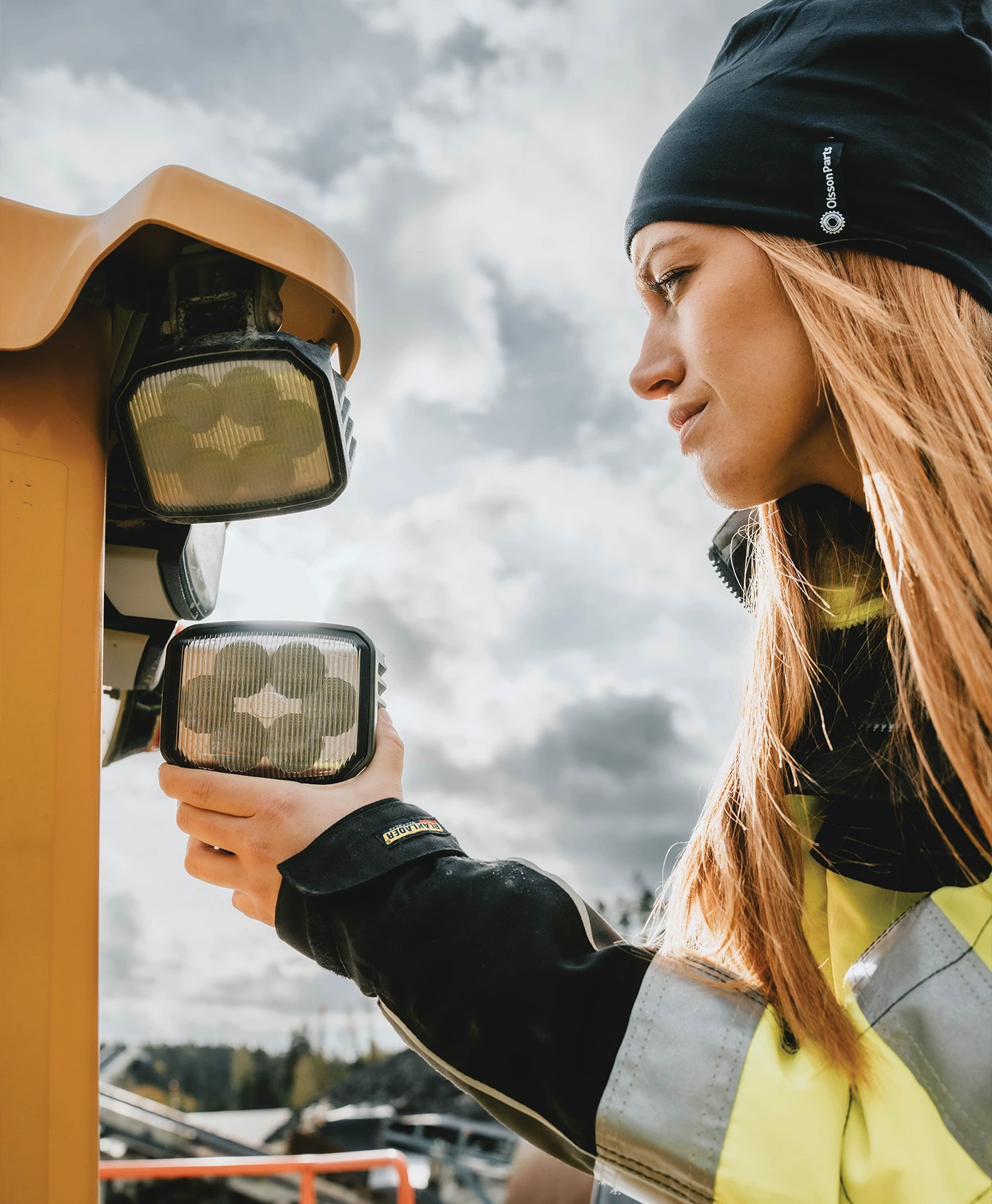
Work lights
Work lights illuminate the area around the machine when loading, ploughing or working with tools. Here you choose above all based on light pattern and strength.
Wide, narrow or combined light pattern
A wide light pattern spreads the light and suits situations where you want to illuminate a large area close to the machine. A narrow light pattern concentrates the light and reaches further ahead. If you want both, there are lamps with a combined light pattern. Think through where the lamp will sit and what you need to see – light straight ahead of the tool has different requirements than light to the side or rear.
Placement and mounting
Work lights are not only needed on the machine. When you are reversing into tight spaces, it is often just as important to illuminate what is behind you, for example a trailer or a tool. Rotatable and tiltable mounts let you direct the light where you need it, even when the surface is not flat. For tight spaces there are compact models that bolt directly onto the surface.
See work lights
Tip: lighting for what is behind you too
When reversing into tight spaces, it is often just as important to illuminate the trailer or tool behind you. Combine compact head lights for tight spaces, rotatable lamps that can be freely aimed, and lamps with a built-in warning light at the rear to be seen in traffic.
See tinkering tips – Work lights on tools
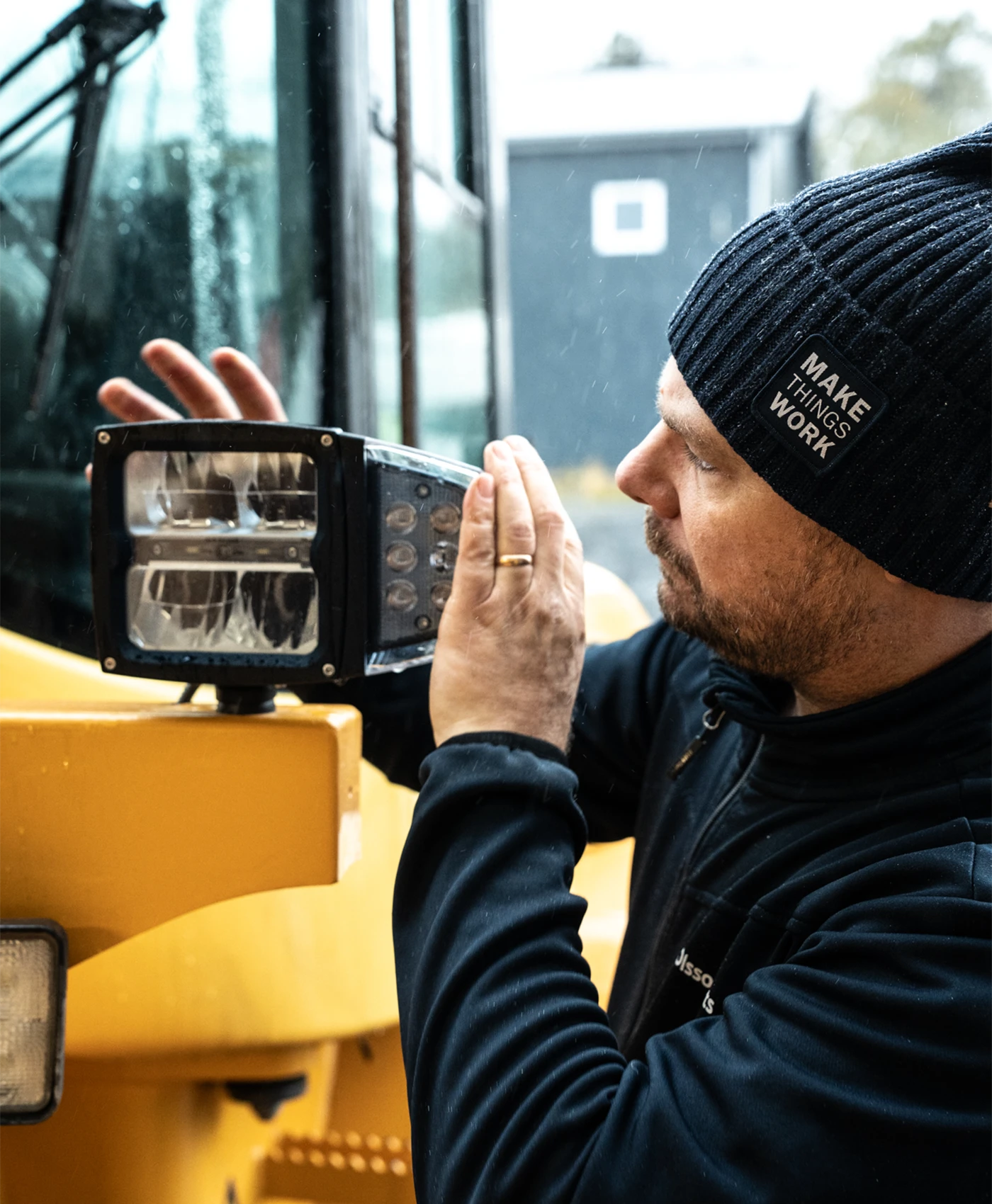
Head lights and head light inserts
Head lights handle main, dipped and parking light and determine how you see when driving in the dark. They are available in round and square designs as well as modern LED options with considerably stronger light than the original.
Whole head light or just the insert?
If the housing is still in place and intact, it may be enough to replace the head light insert. If you are going to replace the whole unit, or the housing is missing, you choose a complete head light. Many models fit as a direct replacement and can be mounted upright or suspended.
Upgrade halogen to LED
On older machines, main and dipped beam have long been tricky to upgrade. Today there are head light inserts and complete LED head lights that provide both more and better light, while there are fewer bulbs to replace. If you use the existing connector, the replacement is usually easy. If the lamp is to be used on the road, it needs to be E-marked and have the right approvals.
See head lights
Tip: upgrade halogen to LED
When you replace head light inserts, you can usually reuse the vehicle's original connectors – the new insert has the same flat pins, often with an extra cable for parking light that you can connect or insulate. Do not tighten the adjuster screws all the way down, but leave some play so that you can set the light pattern afterwards.
See tinkering tips – Switch to LED lighting
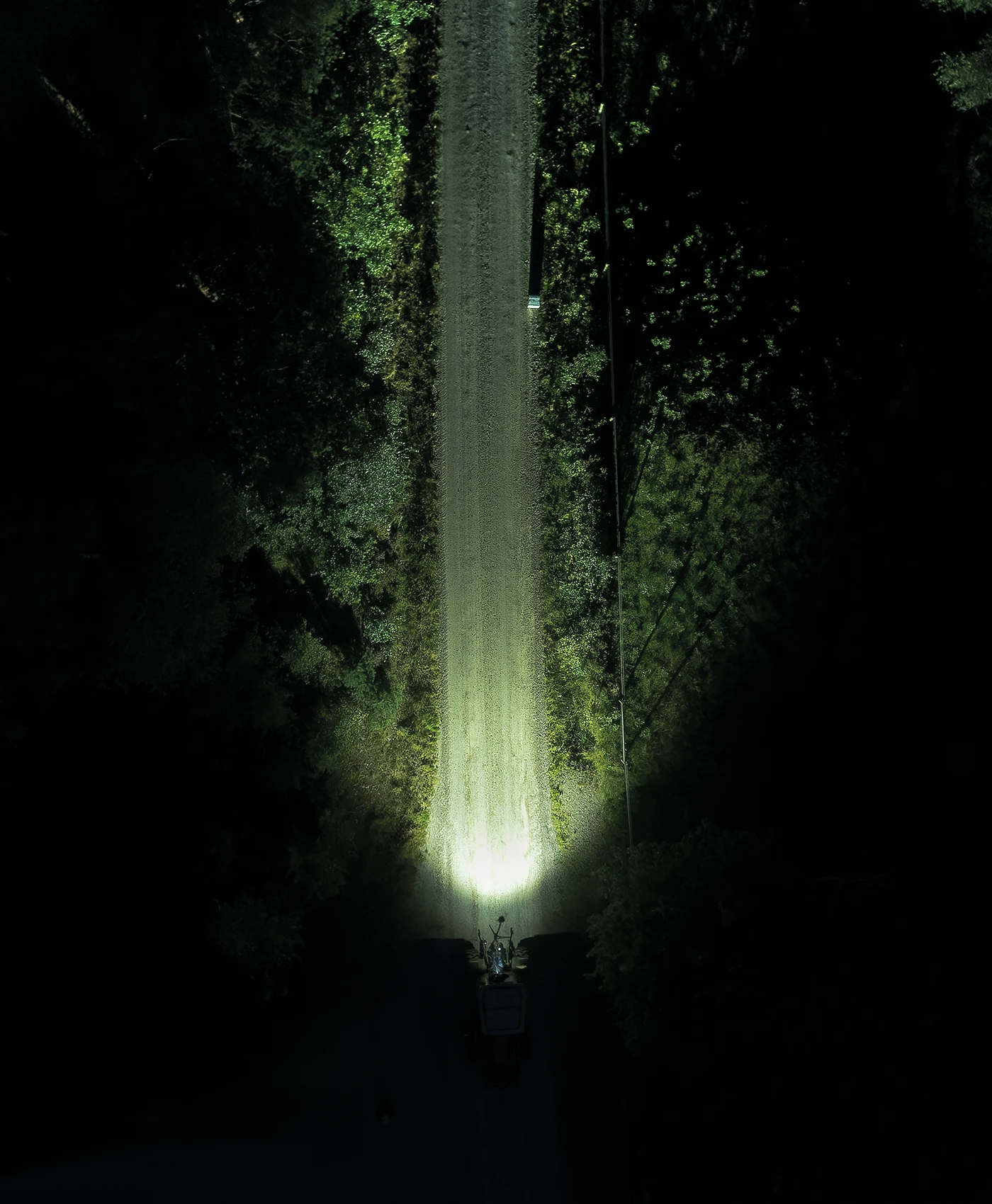
Driving lights and light bars
Driving lights and light bars improve visibility on country roads and off-road where the standard lighting is not enough. LED models provide a long range, and several have features such as a dynamic position light, boost mode and approval for both off-road and on-road use.
Range and position light
For driving lights, range is a key measure. It is often stated as the distance at which the light reaches 1 lux, for example ”1 lux at 470 m”. A boost mode can temporarily increase the strength further. Many modern driving lights also have a position light that illuminates at start-up and works as a daytime running light.
Light bars
A light bar provides a wide spread and comes in several lengths, straight or curved. Some bars have a built-in warning light and selectable position light, which makes them useful both for visibility and for being seen. Always check which approvals the bar has before using it on the road.
See driving lights
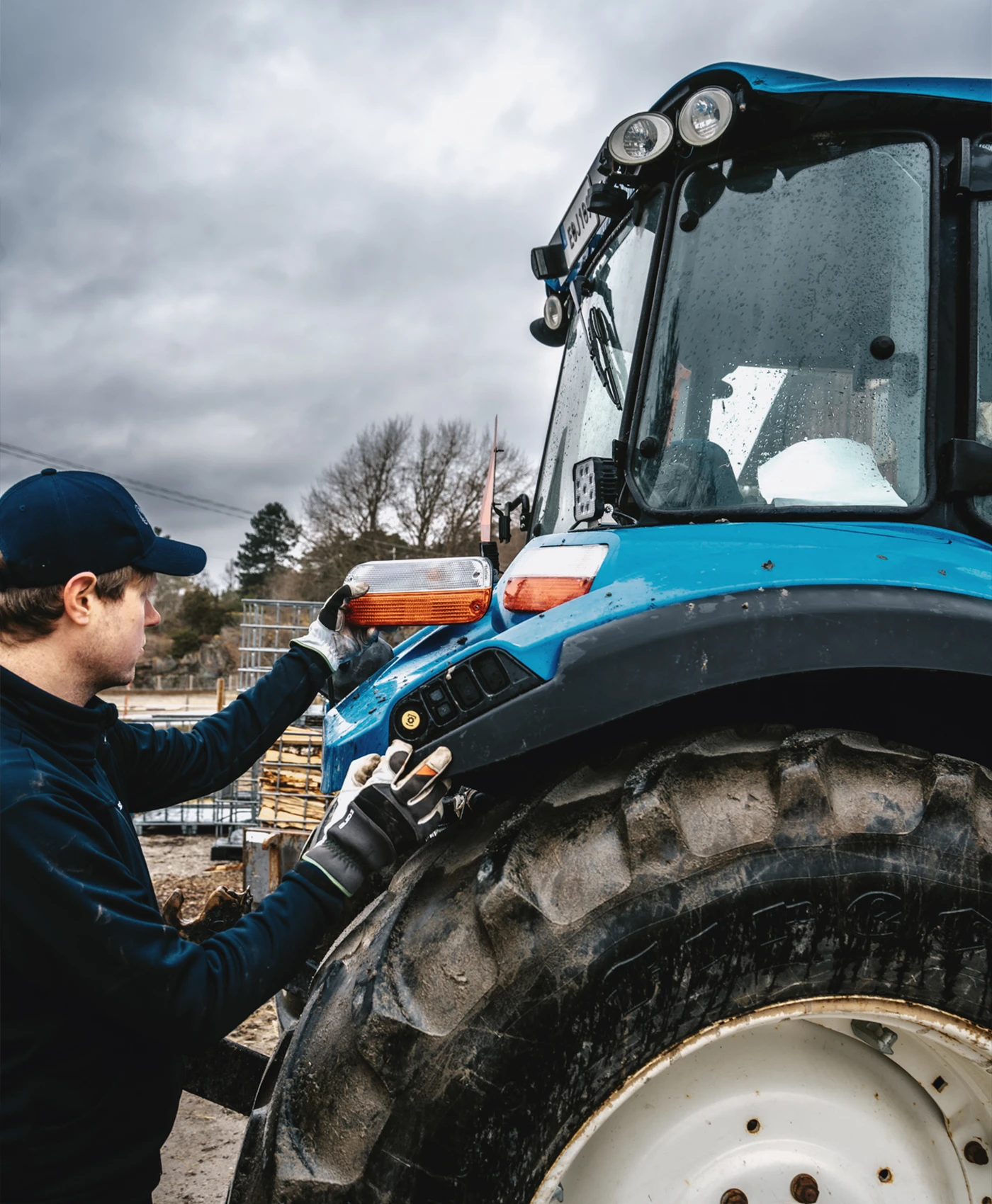
Rear lights and number plate lighting
Rear lights combine rear, brake and indicator light plus number plate lighting in the same unit and make the vehicle visible from behind. Here the number of functions and the mounting method matter most.
Number of functions
Rear lights come with different numbers of functions, from simple lamps with rear and brake light to models with rear, brake, indicator, reversing and fog light plus number plate lighting. Choose based on what the vehicle requires and which functions are needed to be legally equipped.
Fixed or wireless
In addition to fixed models for the right and left side, there are wireless rear lights with a magnetic bracket. They can be moved quickly between different tools and trailers without you having to run cables, which is practical when the same lamps are to be used on several units.
See rear lights
Keep the ”lamp broken” warning in mind
Some vehicles have an instrument warning that reacts when a lamp draws too little current. If you switch to LED, the warning may trigger unnecessarily. Check whether the lamp has a built-in resistance, or whether you need to add a separate resistance.
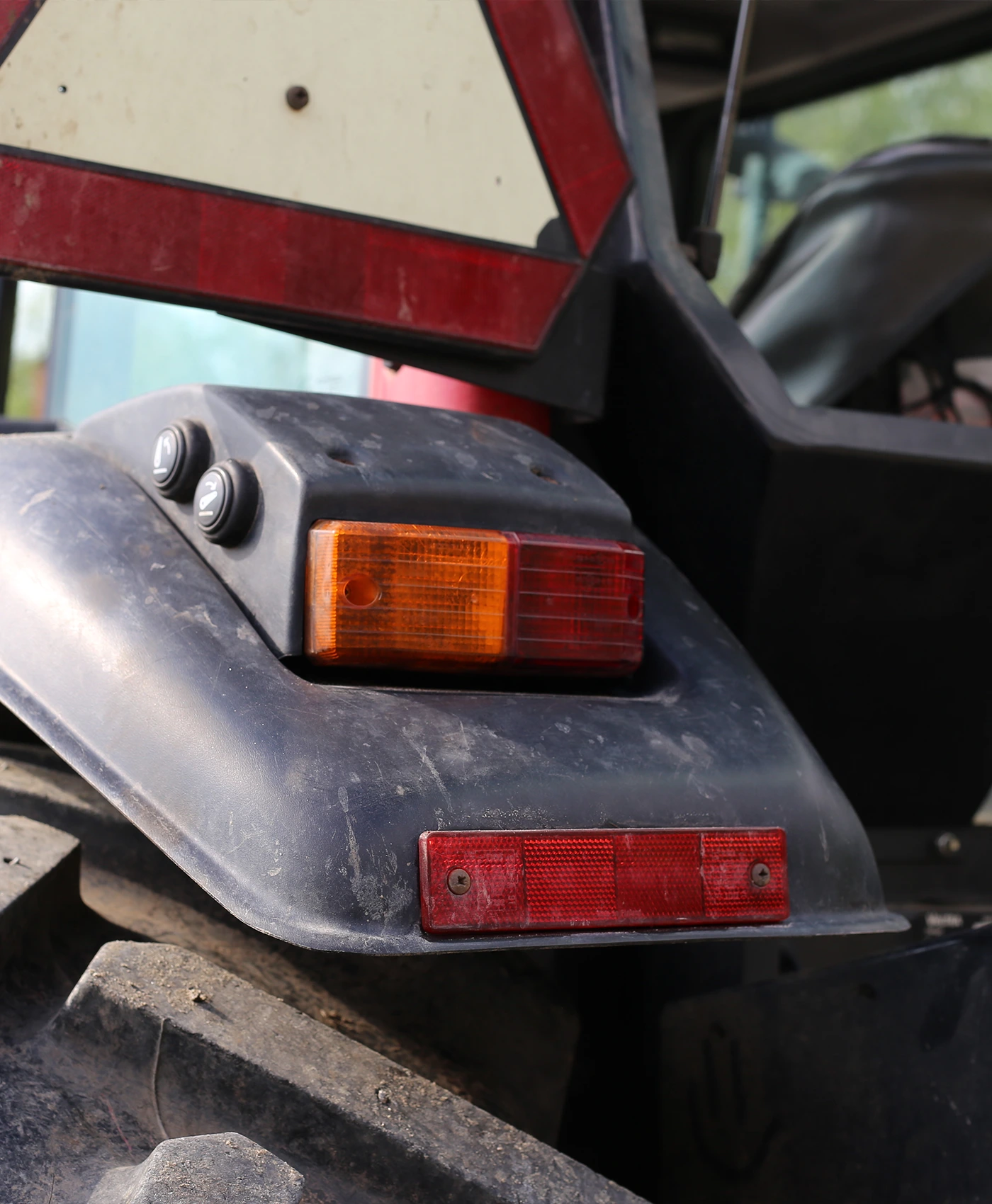
Indicators, position lights and reflectors
Indicators and position lights mark the vehicle's direction and width, which is particularly important for wide tools and slow-moving vehicles in traffic. Reflectors and slow-moving vehicle signs make the vehicle visible even without power.
Position lights and colours
Position lights come in amber, red and white, often with a built-in reflector. The colour and placement are governed by where on the vehicle the light is to sit. Many are easy to mount with tape or screws and are available for both vertical and horizontal installation.
Resistance for LED indicators
On vehicles that previously had halogen bulbs, a resistance may be needed when you switch to LED indicators, otherwise the instrument panel may incorrectly indicate that a lamp is broken. One resistance is fitted per indicator lamp.
Reflectors and slow-moving vehicle signs
Reflectors complement the lighting and make the vehicle visible even when it is stationary. They are available round, square and triangular, with screws or a self-adhesive back. Slow-moving vehicle signs are required for slow-moving vehicles and are available in both plastic and aluminium with matching mounts.
See indicators and position lights
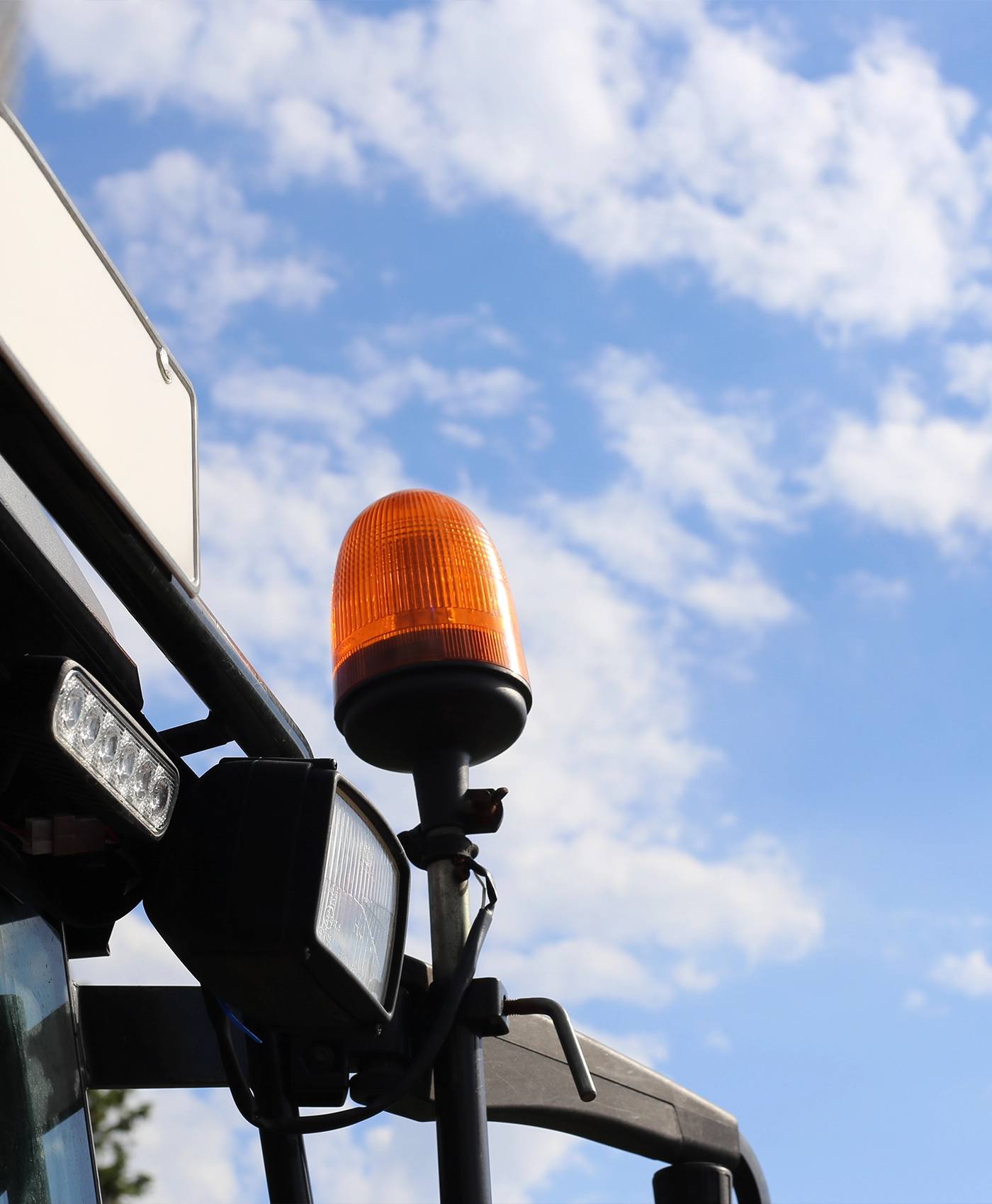
Warning lights and warning beacons
Warning lights, flashing lights, warning beacons and warning light bars alert the surroundings during slow-moving or stationary work. They increase your visibility in traffic and when working with elevated risk.
Beacon, flashing light or bar
A warning beacon is the classic rotating solution and is available for pipe, magnet or fixed mounting. Flashing lights are more compact and often have several selectable flash patterns. For greater visibility there are complete warning light bars. Many models are ECE R65-approved, which is the approval that applies to warning and flashing lights.
Mounting and portability
Is the light to be mounted permanently or moved between machines? A magnetic bracket and battery-powered beacons make it easy to move the light where it is needed, while pipe and screw mounting suit fixed placement. There is a wide range of mounts for different mounting methods.
See warning lights
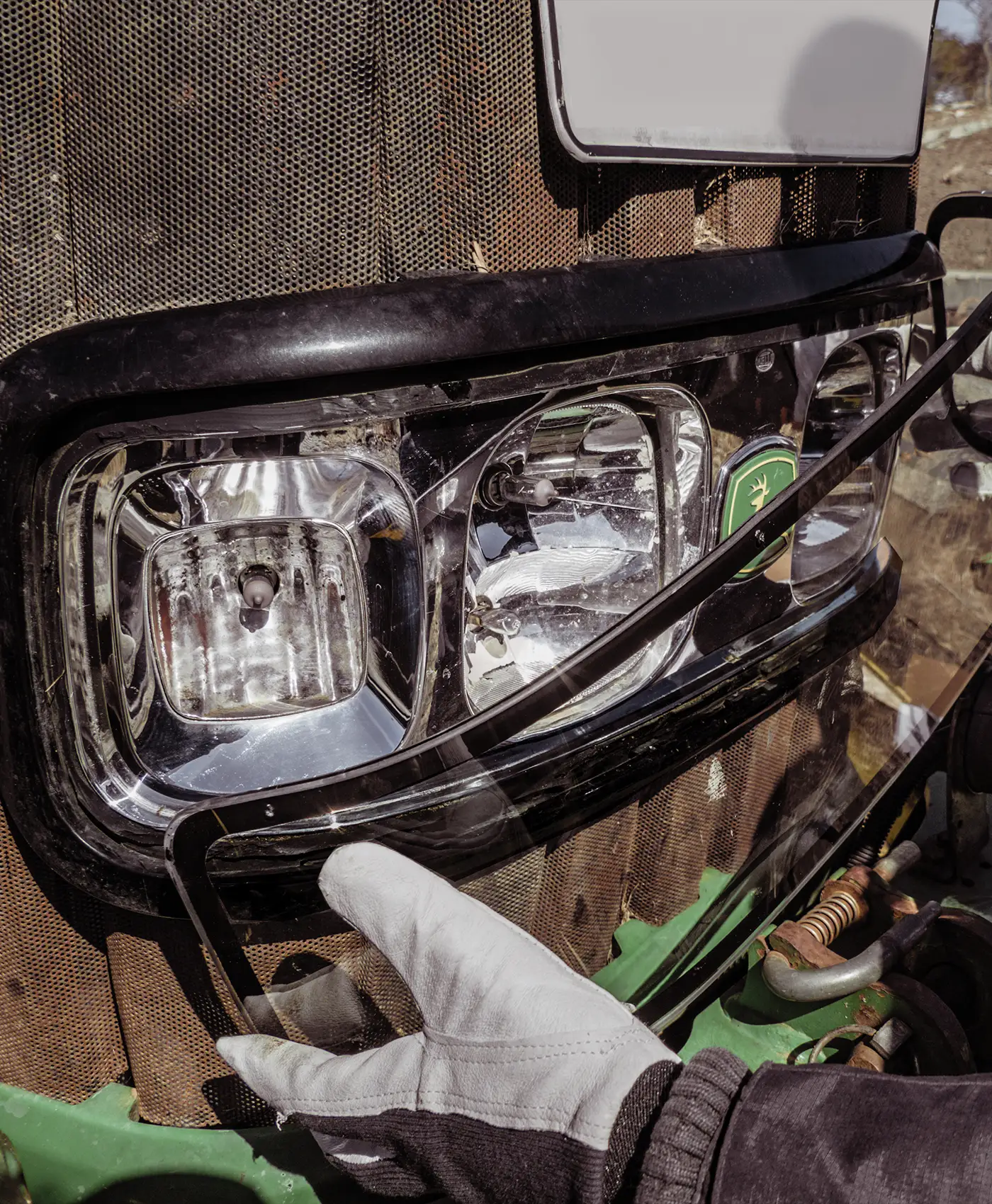
Bulbs and LED replacement
A wide range of bulbs and LED replacement bulbs covers head lights as well as rear, brake and position lights in 12V and 24V. The range includes halogen, xenon and LED.
Find the right socket
Check the existing bulb or the vehicle's specification before you replace it, so that the socket and voltage match. The most common sockets:
| Socket | Filament | Common use |
|---|---|---|
| H1 | Single | Main or dipped beam in head lights, driving lights, work lights |
| H3 | Single | Work lights, fog lights, driving lights |
| H4 | Double | Main and dipped beam in the same bulb, very common in head lights |
| H7 | Single | Main or dipped beam in modern head lights |
Replacing halogen with LED
There are LED replacement bulbs for many applications, with a longer service life and lower power consumption. Keep in mind that not all LED bulbs are approved for exterior lighting on road-going vehicles. Always check the applicable rules for your specific use before you replace them.
See bulbs
LED or halogen?
Modern LED lighting has developed rapidly and is today the first choice for most people. The difference compared with older halogen bulbs is not only about brightness, but also about colour temperature, spread angle and energy efficiency.
| Property | LED | Halogen |
|---|---|---|
| Brightness | Strong and even light | Weaker, yellower light |
| Service life | Very long | Shorter, replaced more often |
| Power consumption | Low | Higher |
| Price | Higher purchase price | Lower purchase price |
| Road approval | Not all LEDs are road-approved – check | Road-approved as standard in original fit |
If you are going to drive on the road, it is important to check that the LED option is approved for exterior lighting – not all LED bulbs are.
What do the numbers mean?
The product sheets are full of measurements and markings. Here are the most common ones, and what they actually say about the lamp.
Lumen and lux
Lumen indicates how much light the lamp emits in total – the higher the value, the stronger the lamp. Lux describes how strong the light is at a certain distance and is often used for driving lights, for example ”1 lux at 470 m”, which describes the range.
Light pattern
A wide light pattern spreads the light over a large area close to the vehicle. A narrow light pattern concentrates the light and reaches further. A combined light pattern gives a bit of both. Choose based on whether you are going to illuminate a working area or see far ahead.
Colour temperature
Colour temperature is measured in Kelvin (K). Around 5000–6000 K gives a white, natural light that many find pleasant and clear to work in.
IP class
The IP class shows how resistant the housing is to dust and water. A high value, such as IP67 or IP69K, means the lamp can handle tough environments with dirt, vibrations and high-pressure washing.
Voltage: 12V or 24V
Check the vehicle's system. Many of our lamps are marked for a range, for example 9–36V, and then work in both 12V and 24V systems.
Markings and approvals
If the lighting is to be used on the road, the approvals are crucial. The most common ones:
- E-marked: The lamp is approved according to European rules for vehicle lighting.
- ECE R65: A specific approval for warning and flashing lights.
- EMC: The lamp is protected against electromagnetic interference, which is important on machines with sensitive electronics.
Rules can differ between different areas of use and vehicles. If you are unsure about what applies to your specific machine, you are welcome to get in touch with us.
Connecting the lighting correctly
A good lamp does not do the whole job on its own. The right connectors, cabling and relay make the connection reliable and considerably easier.
Deutsch connector
The Deutsch connector is a sealed and robust connector used on much of our work lighting. It provides a safe and easy connection even in tough environments with vibrations and dirt, and means you avoid splicing loose cables.
Cable kits with relay
Most machines already have relays fitted, but if you are going to extend the lighting on a machine that lacks a relay, there are ready-made cable kits with relay, fuse and connectors. They are usually supplied pre-wired, which saves a lot of time.
Adapters and extension
If you want to connect two lamps where previously there was only one, there are double connectors. If you need to reach further, there are extension cables in various lengths. This lets you extend the existing lighting without rewiring everything.
Tip: easier connection
A polarity-reversing adapter for the Deutsch connector means the same lamp fits machines with reversed polarity too, for example some construction machines. Another trick is to fit a switch at the outlet, so that you can turn the light on and off without unplugging the connector.
Model-adapted or universal lighting?
Some lighting is universal and fits many vehicles with the help of different brackets. Other lighting is model-adapted, that is, developed for a specific vehicle.
Model-adapted lighting
Model-adapted lighting is made to sit on a specific machine and replace the original lamp. The advantage is that the replacement is usually minimal: brackets and connectors match the original, and you rarely need to modify anything. That makes it an easy way to upgrade from halogen to LED.
Universal lighting
Universal lighting is more flexible and can sit on many different vehicles. Here the supplied brackets can often be moved, so that the same lamp fits both the left and right side and several models. A movable bracket makes the lamp independent of side, which is practical since some machines have different head lights on the left and right.
Unsure what fits your machine?
The reference number is always the safest way to find the right part. On the product page you will find information about fit, and do not hesitate to contact us if you are unsure – we will help you find the right fit for your specific machine.
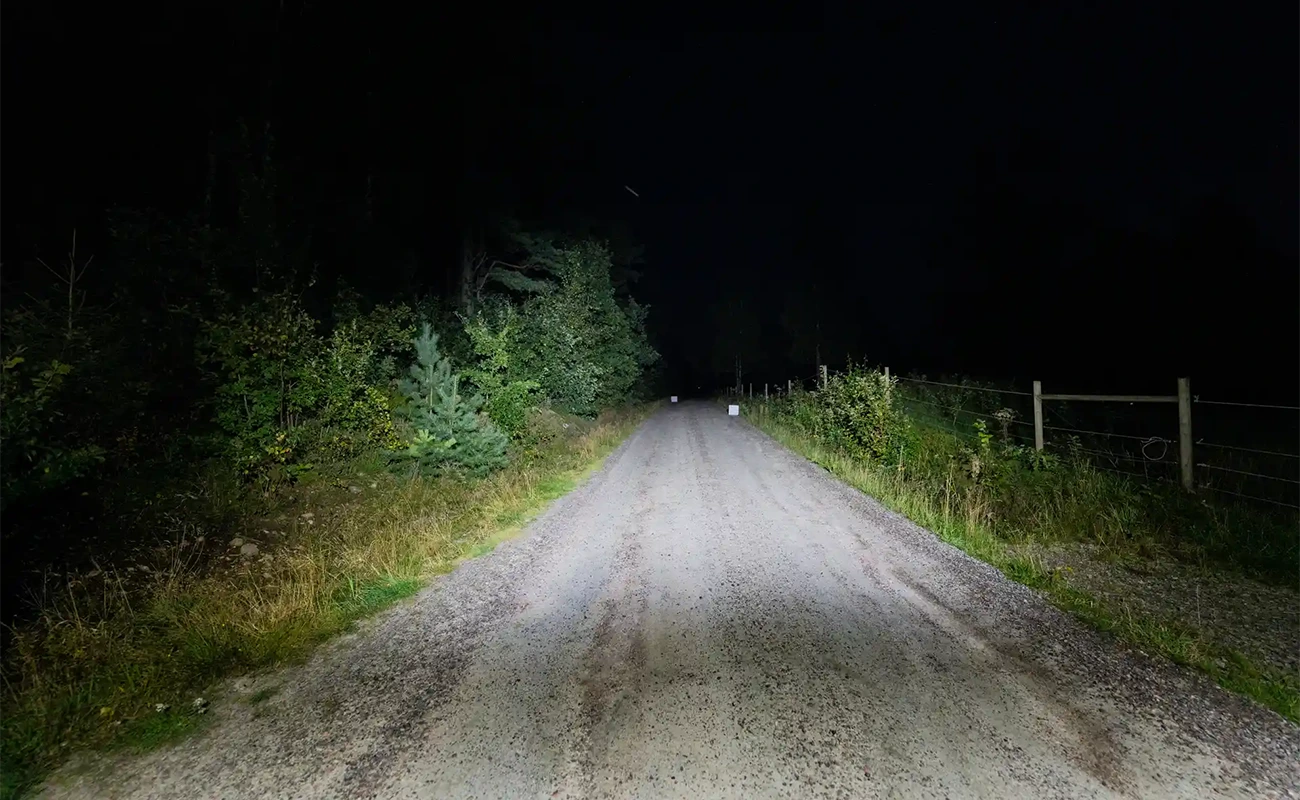
Compare lighting in our light studio
Choosing the right lighting on paper is one thing – seeing how it actually shines is another. At lights.olssonparts.com you can compare a large selection of our lighting range and see how each individual light source performs under real conditions.
The images are taken on a dark night on a straight stretch along a gravel road, with the lamps mounted on a vehicle. You can see how far, wide and strong each lamp shines, including from above, which gives a clear picture of both range and spread.
- Light pattern and range
Visualisation of how the light spreads and how far it reaches. - Real conditions
Images taken outdoors in the dark, not in a studio with staged light. - Facts per product
Luminous flux, voltage and power gathered for easy comparison.
To the light studio
FAQ / Frequently asked questions about vehicle lighting
What is the difference between work lights and driving lights?
Work lights illuminate the working area around the vehicle, for example when loading or working with tools. Driving lights direct the light forward and provide a longer range when driving on the road and off-road.
Wide or narrow light pattern – which should I choose?
A wide light pattern spreads the light and suits situations where you want to illuminate a large area close to the machine. A narrow light pattern concentrates the light and reaches further ahead. If you need both, there are lamps with a combined light pattern.
What do E-marked and ECE R65 mean?
E-marking means that the lamp is approved according to European rules for vehicle lighting. ECE R65 is a specific approval for warning and flashing lights.
Can I replace halogen with LED?
Yes, there are LED replacement bulbs for many applications. Keep in mind that some LED bulbs are not approved for exterior lighting on road-going vehicles, so always check the applicable rules.
How many lumens do I need?
It depends on the use. More lumens give a stronger light, but the right light pattern and placement matter at least as much. For work lights, a moderate strength with good spread is often enough, while driving lights benefit from high output and a long range.
In our light studio at lights.olssonparts.com you can compare how different lamps perform in reality before you decide.
Which socket does my bulb have?
Common sockets are H1, H3, H4 and H7. Check the existing bulb or the vehicle's specification before you replace it.
What is a Deutsch connector?
A Deutsch connector is a sealed and robust connector used on much of our work lighting for safe and easy connection, even in environments with vibrations and dirt.
Do I need a resistance when fitting LED indicators?
On vehicles that previously had halogen bulbs, a resistance may be needed to avoid a false indication on the instrument panel. One resistance is fitted per indicator lamp.
Do the lamps work in both 12V and 24V?
Many of our lamps are marked for a range, for example 9–36V, and then work in both systems. Always check the product's voltage against the vehicle's system before you buy.
What does the IP class mean?
The IP class shows how resistant the housing is to dust and water. A high value, such as IP67 or IP69K, means the lamp can handle tough environments with dirt, vibrations and high-pressure washing.
Can I move the same lighting between several machines?
Yes. Wireless rear lights and warning beacons with a magnetic bracket can be moved quickly without running cables. For work lights, Deutsch connectors and polarity-reversing adapters make it easy to disconnect and refit the lamps on another machine.
You might also like

Get news, tips and promotions – straight to your inbox
Subscribe to our newsletter and receive the latest news, promotions, and maintenance tips directly to your inbox. It’s completely free, and you can easily unsubscribe at any time.
Do you have a question?
Here we have collected common questions and answers.
Can’t find the answer to your question? Don’t hesitate to contact us!
FAQ / Frequently Asked Questions