27 May 2026
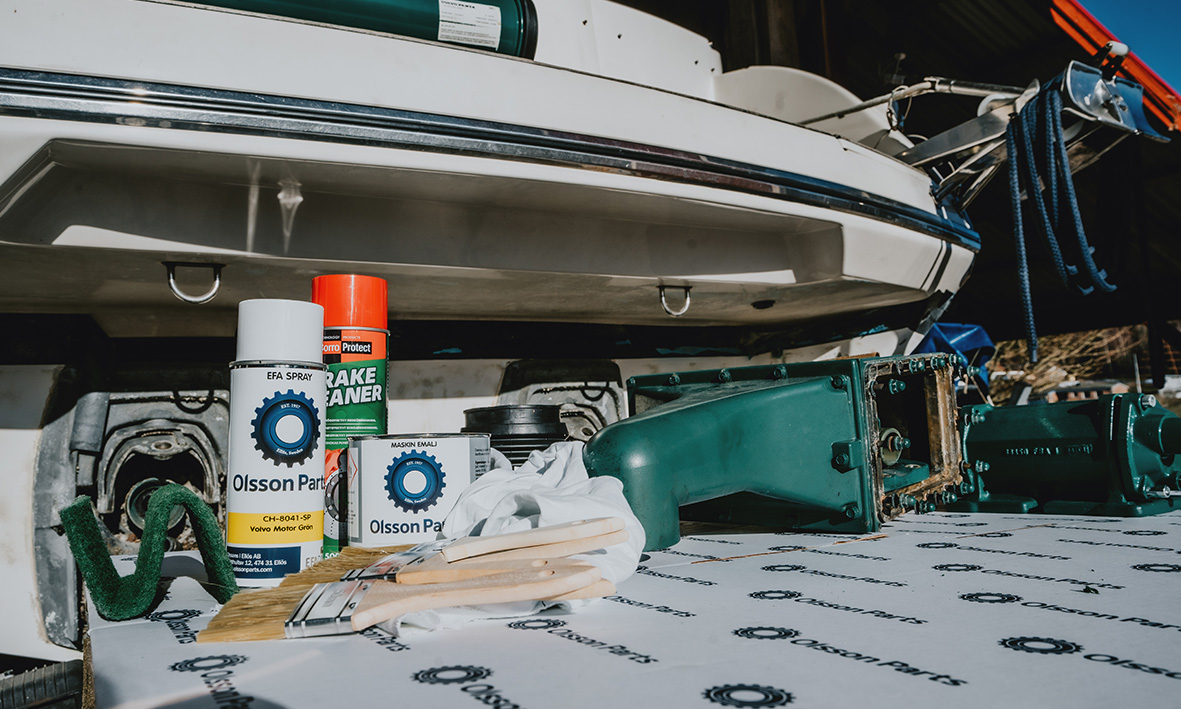
Painting machine parts in marine environment – protect against moisture, salt and rust
Machinery parts and equipment in marine environments are subject to significant stress. Moisture, salt and temperature changes promote rust formation. That is why the choice of boat paint or marine paint is crucial for durability. Painting in a marine environment is different from painting machinery on land. It's not just about achieving a good-looking finish, but also about choosing the right anti-corrosion paint and applying a proper undercoat. With the right preparation, you reduce the risk of rust, extend the life of the parts and get a result that lasts over time.
– In marine environments, the undercoat becomes extra important. Salt and moisture tend to find their way in under damaged surfaces. That's why cleaning, rust removal and the right primer are crucial for the paint to last," says Fredrik Vikström, range developer at Olsson Parts.
What is meant by marine environment?
Marine environment doesn't only refer to parts on a boat. It can also include machinery, tools and metal parts used near the sea, by lakes or in coastal areas.
Examples of parts that may need to be painted or repainted include:
- metal parts on boats
- engine mounts
- stands and brackets
- fittings
- covers and casings
- trailer and cart parts
- pump housings and machine parts
- equipment stored outdoors near water
- machines used in harbour or coastal environments
What these surfaces have in common is that they are often exposed to moisture, salt and weather. This makes corrosion protection particularly important.
Why are salt and moisture such a problem?
Moisture is one of the most common causes of rust on metal. In marine environments, the stress is particularly high because salt can accelerate corrosion and cause damage to develop faster.
When paint is damaged by scratches, stone chips or wear and tear, moisture can penetrate the metal. If salt is also present on the surface, the rusting process speeds up even more. That's why small damages should be repaired early, before the rust spreads under the paint layer. It's also important to wash off salt and dirt before painting. If you paint over salt, grease or oxidised surfaces, the paint may have poor adhesion and start to peel.
How do I choose the right machinery paint for my boat?
When painting metal parts in a marine environment, you need to consider how the part will be used.
There is a difference between: - parts used indoors or in sheltered locations
- parts outdoors above the waterline
- parts regularly exposed to rain and salt spray
- parts close to water
- parts in constant contact with water
Standard machinery paint can work well on many metal parts above the waterline or in coastal environments, provided the undercoat is applied correctly and the surface isn't constantly immersed in water. Surfaces below the waterline or in constant contact with water often require specialised paint systems. Always follow the product recommendations and choose the paint according to the application.
Keep this in mind when painting in marine environments
When painting machine parts or metal parts for marine environments, you need to be extra careful with cleaning and rust protection.
- Wash off salt, dirt and grease
Always start with a thorough wash. Salt residues, grease, oil and dirt can prevent the paint from adhering properly. Simply wiping the surface isn't enough if it has been exposed to sea air, salt spray or saltwater. Use cleaning and degreasing agents if necessary. Rinse and let the surface dry completely before continuing. - Check for rust and corrosion
Inspect the surface carefully. There may be rust in joints, around screw holes, on edges and where the paint is damaged. Remove rust as thoroughly as possible with a wire brush, abrasive cloth, sander or other suitable method. - Sanding for better adhesion
A glossy or hard surface makes paint adhere less well. Sand the surface matte before priming or painting. This also applies to old paint surfaces that appear intact. After sanding, the sanding dust should be removed completely. - Use the right primer
Primer is especially important in a marine environment. On clean metal, it helps with both adhesion and rust protection. Choose a primer that suits the material and the environment where the parts will be used. Pay close attention to edges, corners, joints and screw holes. This is often where rust starts. - Build up the paint in thin layers
Apply several thin layers rather than one thick coat. Thin and even layers reduce the risk of runs and make it easier to achieve an even surface. Follow the paint's drying time between coats. Don't paint too quickly after priming. - Let the paint cure properly
In marine environments, the paint should be allowed to cure properly before the part is exposed to moisture, salt or stress. Even if the surface feels dry, the paint may need a long time before it has fully cured. Avoid assembling or using the part too early.
What do you need to paint metal parts in a marine environment?
For a durable result, you need the right products and tools.
Cleaning and preparation
- Cleaning agent
- Degreaser
- Cloths or paper towels
- Sandpaper or sanding sponge
- Sander for larger surfaces
- Wire brush
- Optional scraper
- Dust cloth or tack cloth
Paint and protection - Primer suitable for metal
- Machinery paint or other suitable topcoat
- Corrosion protection product if needed
- Hardener if necessary, depending on the paint system
- Thinner if necessary
Painting and masking - Brush
- Roller
- Paint sprayer for larger surfaces
- Masking tape
- Masking plastic
- Mixing cups
- Stir sticks
Protective equipment - Protective gloves
- Safety goggles
- Respirator when sanding and spray painting
- Good ventilation
- Work clothes
Particularly vulnerable areas in marine environments
Some areas need extra attention as they often collect moisture, salt and dirt. - Edges and corners
Paint often becomes thinner on edges and corners. As a result, these areas are more prone to wear and rust. - Screw holes and fixings
Moisture can easily collect around screws, bolts and fittings. Make sure the surface is properly cleaned and protected before assembly. - Joints and welds
Joints and welds can be difficult to clean. Rust can also start in small irregularities. Be careful with sanding, cleaning and priming. - Surfaces with salt splashes
Parts that aren't in direct contact with water can still be exposed to a lot of salt. For example, equipment on trailers, machinery parts and parts stored near the sea.
Common mistakes when painting for marine environments
Not washing salt off properly
Salt residues on the surface can make paint adhere less well and cause rust to come back faster. Wash thoroughly before sanding and painting.
Painting on a damp surface
Moisture under the paint layer can cause poor results. Allow the surface to dry completely before painting.
Using the wrong paint for the application
Not all paints are designed for constant contact with water or harsh marine conditions. Always check that the paint is suitable for the environment in which the part will be used.
Skipping the primer
On bare metal, primer is important. Without the right primer, the topcoat may not adhere as well, and rust protection may be compromised.
Waiting too long to touch up damage
Small damages can quickly become large ones. It's better to repair early than to wait until the rust has spread.
Preventative maintenance - touch up early instead of repairing later - It's best not to wait until the surface is heavily corroded. By checking machine parts, fittings and metal parts regularly, you can detect damage early.
- Painting small scratches and damage often takes much less time than having to sand down and treat large rust infestations later.
- For equipment used near the sea or water, it can be a good idea to do a pre-season and post-season check. That way you can quickly see which parts need to be cleaned, protected or repainted.
How to make painted parts last longer in a marine environment - Once the parts are painted, maintenance is important. Wash off salt and dirt regularly. Don't let saltwater or dirt sit on the surface unnecessarily.
- Also check exposed parts at regular intervals. If you see a scratch or damage in the paint, it should be repaired as soon as possible. This will reduce the risk of moisture causing rust under the paint layer.
- Storage also plays a role. If possible, painted metal parts should be stored in a dry and protected place when not in use.